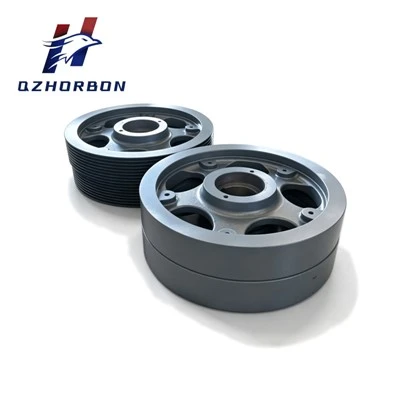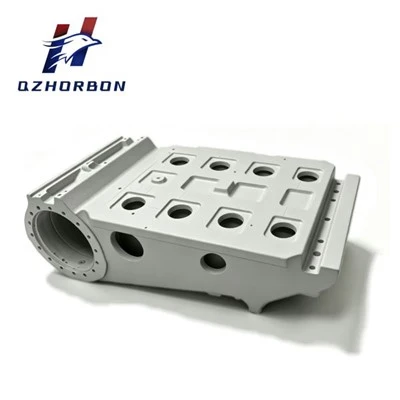

You have changed jaw plates twice this year. The wear still runs heavier on one side, and the new bearings started to run out again before the liners were half worn. At this point, another set of liners or another set of bearings is probably not the answer. The problem may sit in the casting that holds everything: the swing jaw.
This guide explains what a swing jaw is, how swing jaw removal steps should be planned, and why the bearing seat check is the step that tells you whether to reinstall, repair or replace. It is written for maintenance teams, and for the buyers and distributors who have to approve the spend.
Swing Jaw vs. Jaw Plate: Know What You Are Replacing
Many articles and quotations use "swing jaw" and "jaw plate" as if they were the same part. They are not.
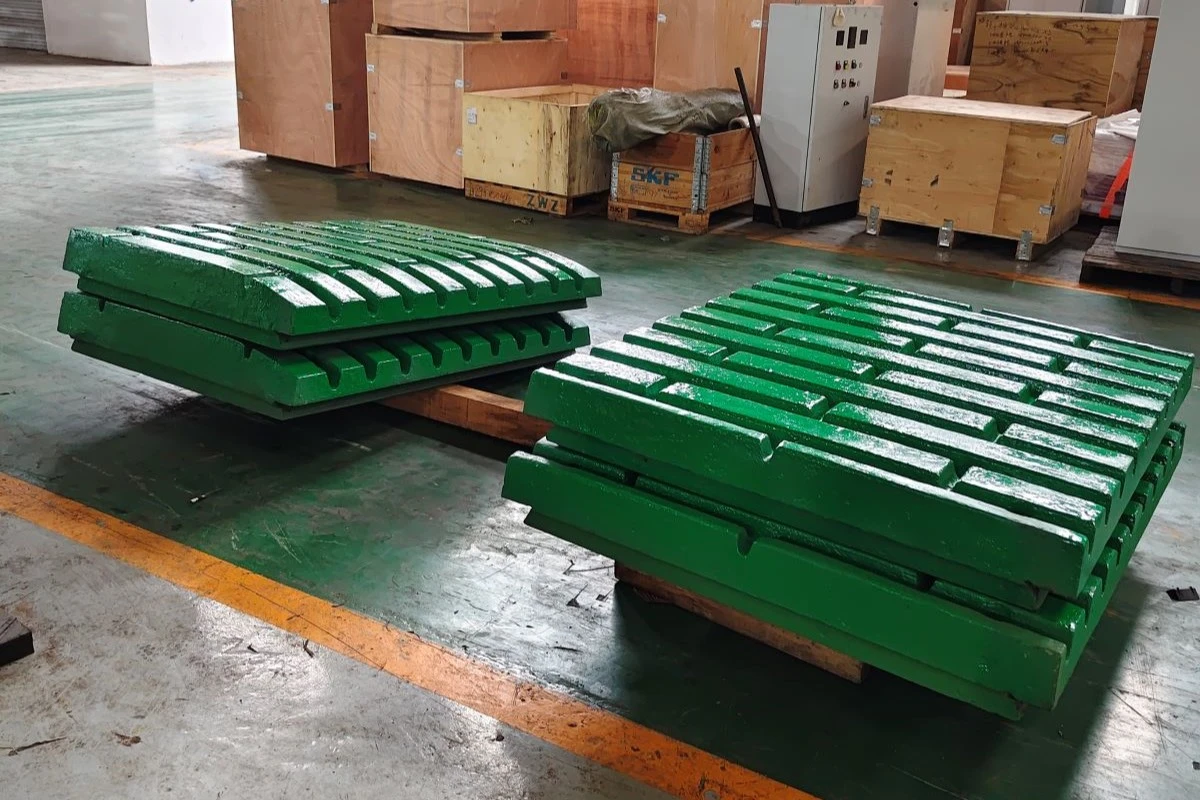
- Jaw plate (liner): the replaceable manganese steel surface that touches the rock. It is a consumable and is changed often.
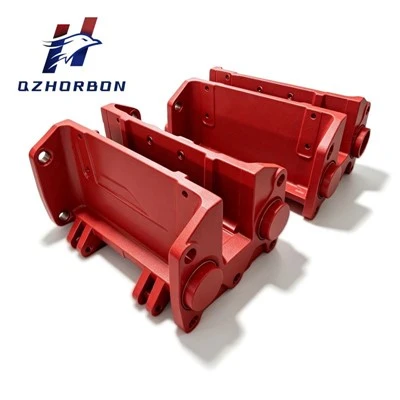
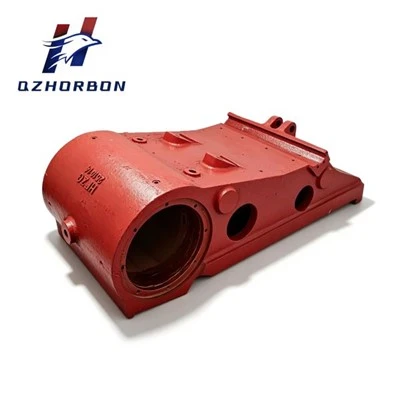
- Swing jaw (swing jaw body): the structural casting behind the jaw plate. It carries the eccentric shaft through its bearing seats and has the toggle seat built in, so it takes the load of every crushing stroke.
A simple way to think about it: the jaw plate is the tire, and the swing jaw is the wheel hub. You change tires often. You change the hub rarely, but when the hub is out of tolerance, new tires will not fix the vibration.
This is why swing jaw replacement is a different decision from a routine liner change. The part is more expensive, the lead time is longer, and a wrong call costs weeks of downtime.

When Swing Jaw Wear Points to the Casting, Not the Liner
Inspect the swing jaw at every second or third jaw plate change. Put it on the overhaul list when you confirm any of these signs:
Asymmetric, repeating liner wear. If the same pattern shows up on consecutive liner sets (heavier on one side or locked to one zone), the cause is probably bore geometry in the casting, not the liner.
Bearing runout returns after a bearing change. If runout comes back within one liner set after a confirmed bearing replacement, the bore wall may no longer hold the bearing in alignment. A second bearing change will give the same result.
Toggle seat deformation. Uneven contact marks or a deformed contact zone cause an unstable discharge setting and speed up toggle plate wear.
The same failure on the third or fourth liner set. At this point, replacing liners without measuring the casting is deferred structural repair, and the cost per cycle keeps rising.
Swing jaw wear that follows one of these patterns is a measurement problem first and a purchasing problem second.
Before You Start: Lockout and Lifting Plan
A swing jaw assembly is heavy. Most injuries and parts damage during swing jaw replacement happen in the first and last ten minutes, during lifting and setting down. Before any bolt is loosened:
Lock out and tag out the drive and feeder, and confirm zero energy.
Empty the crushing chamber and clean the work area.
Check the lifting plan. Use rated lifting gear, a designated signalman, and a crane operator who can see the signal.
Support the jaw so it cannot swing or close unexpectedly when tension is released.
Prepare clean wooden blocks or cribbing so the casting is never set on a machined surface.
Have the OEM manual or the part drawing at hand. Torque values, shim stacks and assembly order are model-specific.
Swing Jaw Removal Steps
The exact sequence depends on your crusher design (single or double toggle, shim or hydraulic adjustment), so follow the OEM manual for your model. The general order is:
- Release the toggle system. Relieve the tension rod and spring or the hydraulic setting, then remove the toggle plate so the jaw no longer carries thrust load.
- Remove the jaw plate and cheek plates. This gives access to the casting face and lowers lifting weight. It also lets you inspect the backing surface for cracks.
- Mark and record. Mark the position of shims, end covers and bearing caps. Photograph the assembly. Mistakes in reassembly often start here.
- Remove bearing caps and end covers. Keep fasteners sorted and discard any that are stretched or damaged.
- Lift the swing jaw assembly out slowly. Take the weight first, move in small steps, and watch for binding. If it does not move freely, stop and find out why. Do not force it.
- Set it on supports and clean it. Remove old grease and dirt from every bore and the toggle seat before measuring. Dirt in the seat gives false readings.
If the shaft and bearings are to be pressed or pulled off the casting, use proper pullers or a press. Where the OEM method calls for heating a bearing inner ring, follow its limits. Overheating a bearing or a seat damages the very surfaces you are about to inspect.
Bearing Seat Check: The Step That Decides Everything
The bearing seat check is what separates an informed replacement from a guess. Bearing makers stress that fits on the shaft and in the housing should be revisited every time bearings are replaced, because a very small deviation can cause improper fit and early failure. Housings also wear and can go out of round over time.
What to check on the swing jaw once it is clean and supported:
- Bore diameter at several positions. Measure each bearing seat at more than one depth and in more than one direction, and compare against the drawing, not against a worn old bearing.
- Out-of-round and taper. A bore that is round at one depth and oval at another will not hold the bearing true.
- Alignment between seats. On a casting with more than one bearing seat, check that the seats are coaxial. Misalignment shows up later as heat, noise and runout.
- Seat faces and shoulders. Look for fretting marks, polished spots or signs that an outer ring has been turning in the bore.
- Toggle seat contact. Check for pitting, deformation and uneven contact marks.
- Cracks. Inspect weld repairs and high-stress areas visually, and use dye penetrant or ultrasonic testing where the site allows it.
Record every reading. A written record turns the next overhaul from guesswork into a comparison, and it gives you something concrete to show your supplier if a warranty question comes up.
Replace the Bearing or Replace the Swing Jaw?
|
What you find |
Likely cause |
Practical decision |
|---|---|---|
|
Bores within drawing tolerance, bearings worn |
Normal bearing life or lubrication issue |
Replace bearings, seals and grease, then reinstall |
|
Minor surface damage, bores in tolerance |
Handling or contamination |
Dress or clean, replace bearings, monitor |
|
Bores out of tolerance or out of round |
Casting wear or deformation |
Replace the swing jaw, or repair only with a verified method |
|
Runout returns after a correct bearing change |
Bore can no longer hold alignment |
Replace the swing jaw |
|
Cracks in the casting |
Structural fatigue or overload |
Replace the swing jaw |
Repair by welding and re-machining can work in some cases, but it adds risk: heat input, new stress and a longer, less predictable downtime. For a site that depends on the crusher, a new swing jaw that arrives with a full inspection record is often the lower-risk option.
Buyer's Guide: Avoiding Costly Mistakes
When a swing jaw is condemned, procurement decisions come fast. Here is how to keep the purchase from becoming the next problem.
1. Ask for the paperwork before you ask for the price. A swing jaw from a serious manufacturer should ship with a spectral analysis report that matches the casting's heat or batch number, HRC hardness records, a CMM dimensional report with actual measured bore values, and an NDT flaw detection certificate. If your site requires third-party inspection, state it at order stage.
2. Check the bore readings before pressing bearings. Compare every measured bore against the tolerance on the drawing. In Horbon's PEV130 reference configuration, for example, the C3 bearing fit uses a pre-mount radial clearance of 0.340–0.450 mm. Always confirm the fit values for your own model and bearing type.
3. Think in sets, not single parts. Buying the casting, the toggle seat and the bearings from different sources across different overhauls adds interface risk. A seat machined to one casting's tolerance may not match a toggle seat from another source. A kit built against one drawing revision removes that variable. For the PEV130 reference, the kit includes the swing jaw body (Part No. 3102130101), movable jaw plate, toggle seat, four C3-class roller bearings, labyrinth seals and grease nipples.
4. No drawing? Don't stop at the part number. If you only have a worn or broken part, a manufacturer with reverse-engineering capability can measure it and produce 2D/3D drawings. Horbon's technical team can usually produce a first-version drawing in about three days, and the part can be made to your drawing or part number.
5. Plan the timeline. Typical lead time is 15–30 days, with FOB or CIF from Shanghai or Ningbo, and a minimum order of 5 pieces. Distributors can use that to build a small standing stock for key models and avoid emergency freight.
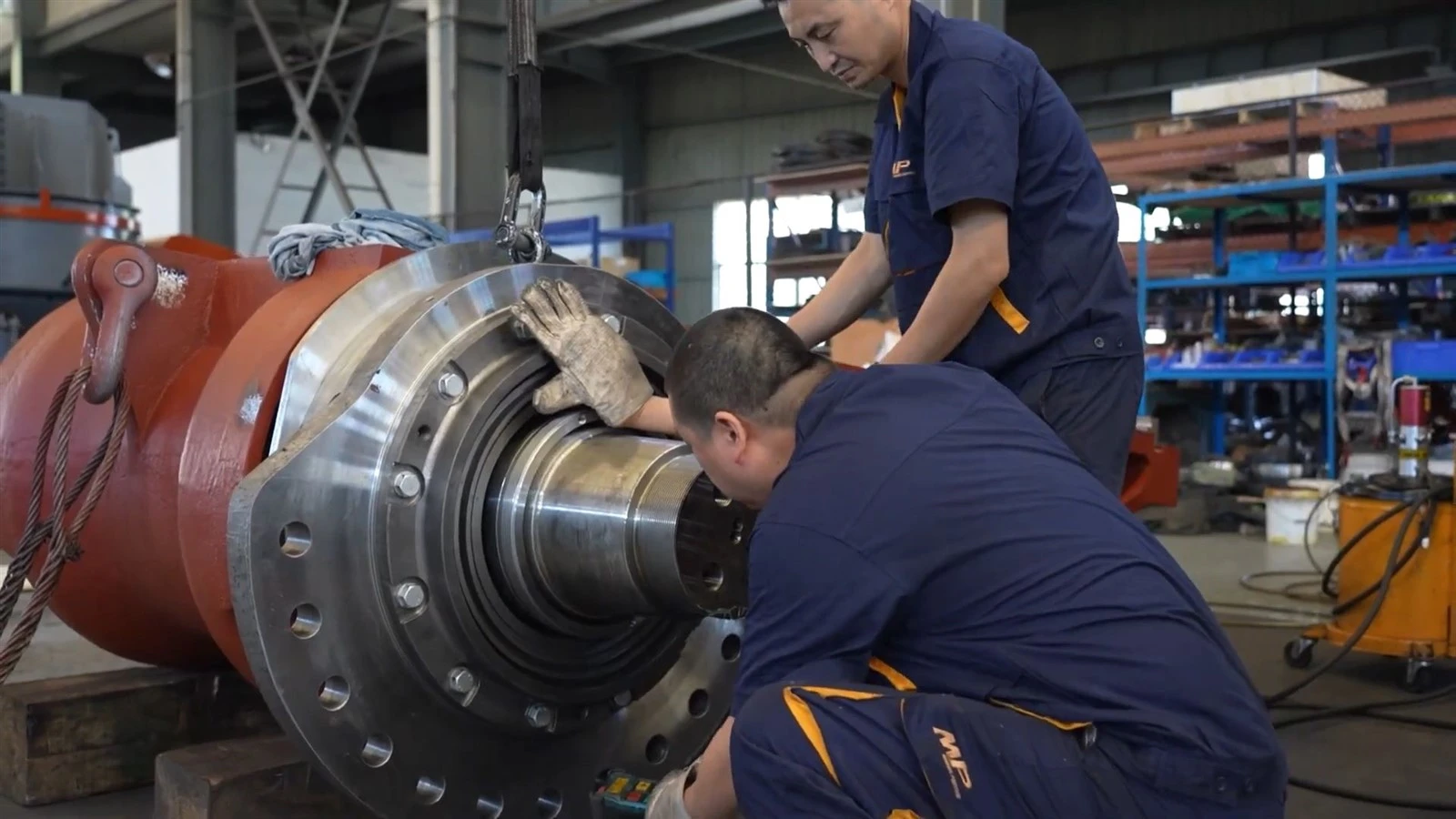
Horbon Engineers in Factory
Summary: Your Action Checklist
- At every second or third liner change, inspect the swing jaw. Do not wait for a failure.
- During any swing jaw replacement or removal, clean first, then measure every bearing seat and the toggle seat. Write the numbers down.
- Replace bearings only if the seats pass. If they fail, or runout returns after a good bearing change, plan a new swing jaw.
- Buy with documents: spectral, HRC, CMM and NDT, and verify bore readings before pressing bearings.
- Order as a set where possible, and give your supplier drawings or the old part if there is no part number.
If you want a second opinion on a worn swing jaw, send us your model, part number or photos through the 【Request a Quote】 page. For related parts, see 【Swing Jaw Body】, 【Jaw Crusher Pitman】, 【Jaw Plates】and【Crusher Bearing Housings】.
FAQ
1. How often should I inspect the swing jaw? At every second or third jaw plate change. Running beyond three liner sets without a dimensional check is a common reason for repeated failures that new liners cannot fix.
2. Is the swing jaw the same as the jaw plate? No. The jaw plate is the wearing liner that touches the rock. The swing jaw is the structural casting behind it that carries the bearings and the toggle seat.
3. Can I just replace the bearings when the bearing seat is worn? Only if the seat is within drawing tolerance. If the bore is out of round or oversize, new bearings will not hold alignment, and the runout usually returns within a short time.
4. What documents should come with a new swing jaw? A spectral analysis report, HRC hardness records, a CMM dimensional report and an NDT flaw detection certificate. Verify them against the casting mark before installation.