
The crack was found at the start of a shift: a thin dark line running out from a bolt hole on the side plate. Production is waiting, and the first question in the maintenance office is always the same: can we weld it and keep running?
That question is reasonable, but it skips a more useful one: why did it crack? A jaw crusher side plate rarely fails on its own. More often it is telling you something about the bolted joint around it. This guide walks through how to read a crack, when repair welding is a sound choice, and when replacement is cheaper in the long run.

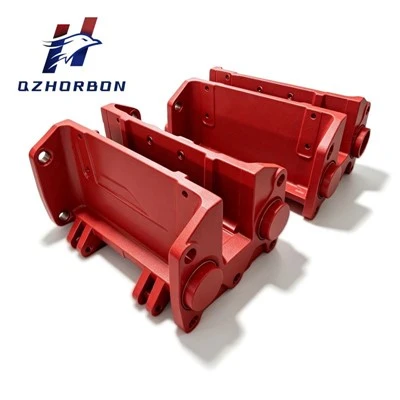
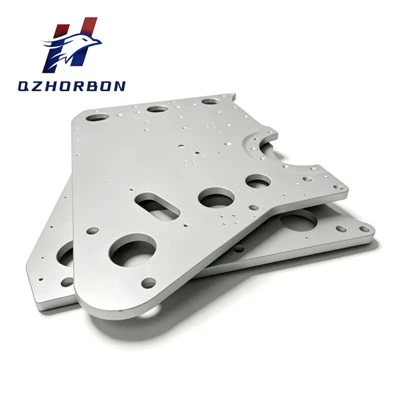
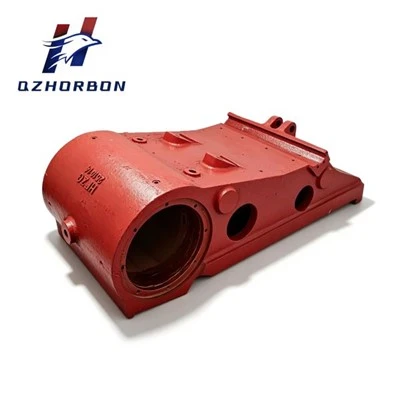
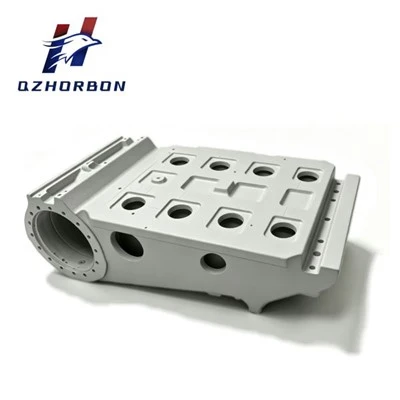
Horbon Jaw Crusher Side Plate
First, Be Sure You Mean the Side Plate
Many articles use "side plate" and "cheek plate" as if they were the same part. They are not.
- Cheek plates (also called side liners) are replaceable wear liners fixed to the inside of the crushing chamber. They are meant to wear out.
- The side plate is a structural part of the frame. It sits on each side of the crusher, between the front frame and the rear end, and holds the frame assembly together with bushings and hexagon bolts.
A worn cheek plate means "order a liner." A cracked side plate means "something structural is under stress." Mixing them up is a common reason buyers order the wrong part, so confirm which one you are looking at before you request a quote.
Why Side Plates Crack: It Often Starts at the Bolts
In a bolted frame, the side plates are clamped to the end sections. Movement between the contact surfaces of these bolt joints exposes them to loosening and fretting fatigue, which considerably reduces the fatigue strength of the side plates and ends. In plain terms, fretting fatigue is a crack that starts where two pressed-together surfaces keep rubbing by tiny amounts. When frame bolts lose their preload, that rubbing begins. uspto
The same source notes that frame bolts therefore need regular checking and re-tightening. That is why side plate bolt hole wear is such an important warning sign. A hole that has gone oval, or a bolt seat with fretting marks, usually means the joint has been moving for some time. Cracks tend to follow. uspto
Other common causes include:
Repeated shock loads, such as uncrushable material or oversized feed hitting the frame.
Contact from neighbouring parts. In one US Mine Safety and Health Administration (MSHA) investigation, the pitman toggle seat was striking the side of the crusher structure and had worn roughly a 3/4-inch gouge into the steel side wall. If the damage on a side plate has a clear point of contact, look at what is touching it. msha
Poor seating or alignment after earlier repairs or part swaps.
How to Inspect a Cracked Side Plate
Safety first. Stop the crusher and lock it out before anyone goes near the frame. Never inspect with the machine running or the pitman free to move.
Clean the area so you can see the surface, then work through these checks:
- Locate the crack. Note whether it starts at a bolt hole edge, runs along an existing weld, or sits mid-panel. Bolt hole and weld-area cracks point to joint and stress problems. A crack in open plate area points to impact or overload.
- Check the crack's depth. Surface cracks and through-thickness cracks are very different problems. Dye penetrant or magnetic particle testing can confirm length and tips. Ultrasonic testing helps for depth. A flaw detection check by a qualified person beats judging by eye.
- Look for deformation. Check the plate and the surrounding frame for bowing, gaps at joint faces, or misalignment. Deformation matters because a worn or poorly fitted side plate can accelerate frame wear and throw the jaw assembly out of alignment.
- Inspect every bolt hole. Look for ovality, fretting marks, and seats that no longer sit flat. Check bolts and washers for stretch or damage.
- Look for history. Old weld repairs, previous cracks in the same area, and earlier bolt loosening all raise the risk.
Repair or Replace: A Five-Point Decision Guide
| What you find | Leans toward | Why |
|---|---|---|
| Short, shallow crack away from bolt holes and welds, found early | Monitor or weld repair | Limited stress concentration; repairable if properly done |
| Crack starting at a bolt hole edge | Investigate the joint; weld only if the hole can be restored | The crack is usually a symptom of loosening and fretting |
| Through-thickness crack | Weld repair by a qualified welder, or replace | Needs full removal of the crack, not just a surface pass |
| Visible deformation or poor alignment | Replace | Welding does not restore geometry |
| Same area has cracked or been welded before | Replace | Repeated repair adds cumulative risk |
Welding is not a free fix. Literature on jaw crusher frames points out that welding decreases the fatigue strength of the base material, and quality assurance in complex welded structures is difficult and expensive. That does not rule out repair. It means a weld repair needs a proper procedure. uspto
For general reference, an equipment frame repair manual describes the usual sequence: remove the crack completely by gouging, grind a bevel (from both sides for a through crack), keep preheat, peen or stress-relieve after each pass, and grind flush at the end. That manual is for a different type of machine, so treat it as an outline of good practice, not a crusher standard. Always follow your crusher manufacturer's guidance, and have a qualified welder and engineer sign off on structural repairs. manualslib
A simple rule of thumb: if you cannot explain why it cracked, welding it is a gamble. If the joint is also worn, deformed, or already repaired once, replacement is usually the more economical decision once downtime is counted.
Buying a Replacement Side Plate: Avoiding Common Mistakes
When the answer is "replace," a few buying habits save time and money:
- Send the right information. The crusher brand and model, the part number, a drawing, or the worn plate itself all work. Dimensions vary by brand and model, so a "close enough" plate causes alignment trouble.
- Ask about the material and heat treatment. Confirm what steel the plate is made from and how it is processed, rather than assuming.
- Ask how the part is checked. Reasonable questions: is the raw material tested, is hardness measured, are dimensions verified, and is flaw detection carried out?
- Replace the weak links too. If the old bolts, bushings, or seats are worn, a new plate on a worn joint can crack again.
- Plan ahead. Ordering when the crusher is already down puts you at the supplier's mercy on lead time. Standard orders from Horbon run about 15 to 30 days, and regular stock is kept for common models.
- No drawing? Send a sample. Horbon's engineering team can reverse-engineer a worn side plate and produce first-draft 2D/3D drawings, typically in about 3 days.
For quality control, Horbon's side plates go through raw material spectral analysis, hardness (HRC) testing, 3D coordinate dimensional inspection, and flaw detection, with third-party inspection available on request. The minimum order is 5 pieces, with FOB and CIF terms from Shanghai or Ningbo.


Conclusion: What to Do This Week
- Confirm whether the damaged part is a side plate or a cheek plate.
- Lock out the crusher, then check crack location, depth, deformation, and bolt hole condition.
- Check frame bolt tightness and look for fretting marks across the whole joint, not just at the crack.
- Decide using the five points above. If a crack has repeated, or deformation is present, plan to replace.
- If you are replacing, send your model, part number, drawing, or the old plate for a match, and ask how the new part is tested.
Sending your crusher model and a photo of the damaged plate to our team is a quick way to get a fit check and a quotation: 【Request a Quote】.
FAQ
Can a cracked jaw crusher side plate be welded?
Sometimes. A short, shallow crack away from bolt holes can be repaired with a proper procedure that removes the crack fully, uses preheat, and relieves stress. Through-thickness cracks, deformation, or repeated cracking usually point to replacement.
What causes side plate cracks in a jaw crusher?
Loose frame bolts and resulting fretting fatigue, repeated shock loading, and contact with neighbouring parts are the usual causes. Bolt hole wear is often an early warning.
How often should frame bolts be checked?
There is no single interval that suits every machine. Follow your crusher manufacturer's schedule, and add a bolt check whenever you find any crack, noise, or movement at the joints.
What is the difference between a side plate and a cheek plate?
A side plate is a structural frame part. A cheek plate is a replaceable wear liner inside the crushing chamber.