
A worn toggle seat can create a costly maintenance decision. Should you replace the seat alone, repair the surrounding area, or order a complete jaw crusher rear wall? Choosing the wrong option can either increase spare-parts costs unnecessarily or leave a damaged structural component in service.
The key is to distinguish wear in the replaceable toggle seat from damage to the rear wall itself. In Horbon's product terminology, "rear wall" and "rear frame" refer to the same replacement product. A worn seat does not automatically mean the complete rear wall needs replacement, but a new seat cannot correct a cracked or distorted mounting structure.

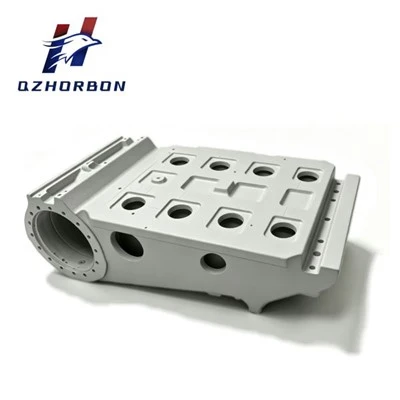
Horbon Jaw Crusher Rear Wall
1. What Does the Jaw Crusher Rear Wall Do?
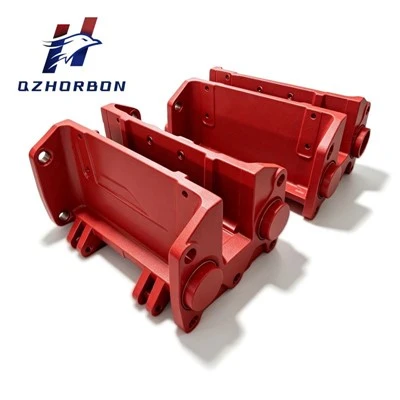
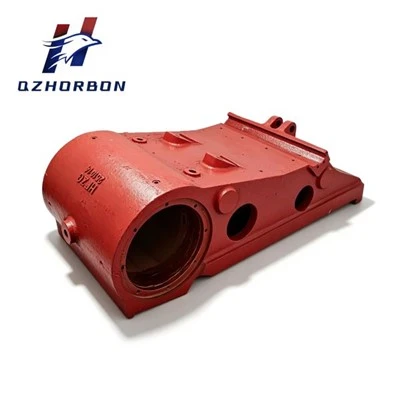
The rear wall, also called the rear frame in Horbon's product context, is a structural casting in the jaw crusher frame assembly. Together with the front frame and side plates, it supports the crushing mechanism and withstands repeated operating loads.
In a common single-toggle crusher, the eccentric shaft drives the pitman (moving jaw assembly). The toggle plate links the lower mechanism to its support points, while the toggle seat provides the bearing surface for the toggle end. The rear-side seat transfers reaction load into the rear frame.
Layouts vary by machine. Seat holders, backing plates, retainers, and adjustment systems are not identical across brands. Use the equipment drawing and OEM manual to confirm the actual arrangement. The rear wall's mounting geometry-the shape, position, and dimensions of its interfaces-must also remain accurate for correct contact and alignment.
2. Why Is the Toggle Seat Replaceable?
The toggle seat is the contact component against which the toggle plate bears. Repeated loading can wear its bearing face, particularly where contact is uneven or operating conditions are severe.
Some jaw crusher designs therefore use replaceable, abrasion-resistant toggle seats. FLSmidth's TST documentation lists the rear frame and replaceable toggle seat as separate components. A Brown Lenox/Kue-Ken manual also describes removing toggle seats with extraction bolts and warns that backing plates must be refitted in the correct orientation to preserve alignment.
These references demonstrate the principle, not universal interchangeability. Seat shape, material, retention method, and installation procedure are model-specific. Horbon's stated configuration also uses a replaceable toggle seat, but buyers should confirm the exact model and assembly before ordering.
When wear is limited to the seat and the rear wall remains sound, a seat replacement may restore the contact surface without replacing the complete casting. That advantage disappears if the mounting area is damaged.
3. Three Conditions to Distinguish During Inspection
A. Wear Limited to the Toggle Seat
Look for grooves, uneven contact marks, loss of the original profile, one-sided wear, cracking, or deformation. Compare the seat with OEM wear limits and inspect the matching toggle end. If damage is limited to the replaceable seat, replace it using the correct part and procedure-but first confirm that the supporting surface is clean, sound, and correctly aligned.
B. Damage to the Seat Mounting Area
Inspect the seat pocket, mating face, backing plate, retaining features, threaded holes, and surrounding casting where these are used in the design. Look for fretting (material loss from repeated movement), impact marks, local cracks, distorted contact faces, or damaged retainers.
If the mounting surface has moved, worn, or cracked, a new seat may not locate correctly. Measure the area against the OEM drawing or an approved repair specification. Do not assume machining, shimming, or welding is acceptable without engineering approval.
C. Cracking or Distortion in the Rear Wall
A rear wall crack is a structural concern, not ordinary seat wear. Possible contributors include fatigue loading, severe overload, casting-related defects, or added stress from uneven foundation support.
Inspect around the toggle seat, loaded transitions, and mounting interfaces. Look for cracks, alignment changes, distorted holes, or movement at connected components. A visual check may not reveal the full extent of a defect. Non-destructive testing (NDT) checks for defects without destroying the part; qualified personnel should select the method.
Do not assume a crack is harmless because the crusher is still running. Stop and follow site safety procedures when structural damage is suspected.
4. How to Decide Whether Only the Toggle Seat Needs Replacing
Do not decide from one symptom alone.
First, record the symptoms. Note knocking, vibration, repeated toggle plate damage, seat movement, or changes in the closed-side setting (CSS), the minimum gap between the jaw plates at the discharge end. CSS can change for several reasons, including jaw plate wear or adjustment problems; it does not prove rear wall damage.
Second, inspect the complete contact arrangement. After isolation and lockout in accordance with the OEM manual, examine the toggle plate ends, both seats, seat holders or backing plates where fitted, and the surrounding casting.
Third, verify geometry. Compare seat position, contact face, mounting dimensions, and relevant holes with the OEM drawing. If visual inspection is insufficient, arrange dimensional inspection or NDT.
Finally, decide according to the damaged component.
If the seat is worn but the rear wall's mounting area and structure remain within the applicable limits, replace the toggle seat.
If the mounting area is damaged or its geometry is uncertain, obtain an engineering assessment before installing a replacement seat.
If the rear wall has a structural crack or distortion that compromises strength or alignment, assess an approved repair or replace the complete rear wall.
The final decision must follow the crusher manufacturer's limits and repair instructions. There is no universal wear depth, crack length, or CSS deviation that can be applied safely to every jaw crusher model.

5. Repair or Replace the Complete Rear Wall?
A replaceable seat makes maintenance more targeted, but it does not make a damaged supporting casting safe.
Confirmed structural cracks, significant distortion, or damaged interfaces require engineering assessment. Repairability depends on material, crack location and extent, operating loads, previous repairs, and the OEM-approved procedure. Welding is not a universal solution for cast crusher structures; an improvised repair may cause further distortion or compromise alignment.
Consider replacement when structural integrity cannot be demonstrated, critical geometry cannot be restored and verified, or no approved repair is available. The new part must match the actual machine-not just the generic description "jaw crusher rear frame."
6. What Should Buyers Check Before Ordering a Replacement Jaw Crusher Rear Wall?
For maintenance teams, distributors, and bulk buyers, accurate identification before production helps prevent fitment problems. Prepare:
Crusher identification: Brand, model, serial number, and original part number if available.
Technical references: OEM drawing, assembly drawing, or clear photographs of the complete part and critical interfaces.
Key dimensions: Overall dimensions, mounting-hole positions, mating surfaces, seat location, and relevant bore or pocket dimensions.
Related components: Toggle seat type, backing plate or retainer arrangement, toggle plate dimensions, and any model-specific adjustment features.
Material and operating conditions: Original material specification, heat-treatment requirements, feed characteristics, impact level, and operating environment.
Order and inspection requirements: Quantity, batch requirements, dimensional inspection records, material verification, hardness testing, and NDT requirements where specified.
Match material and heat treatment to the original design and service conditions. Horbon lists high-manganese steel and chrome-moly alloy steel options, with heat treatment and customization. These grades are not interchangeable by default; confirm the specification with the OEM drawing or engineering team.
Horbon describes precision casting, CNC machining of mating surfaces and bolt holes, spectral material analysis, Rockwell hardness (HRC) testing, 3D coordinate dimensional inspection, and non-destructive flaw detection. For a bulk order, agree on the required inspection records and acceptance criteria before production.
Without drawings, a worn or damaged sample may support reverse engineering. Horbon states that it can prepare 2D/3D drawings in approximately three days after receiving the sample and requirements. Approve the drawing before production. The product page lists a standard lead time of 15–30 days and an MOQ of five pieces; confirm current terms for the exact model.
For a replacement enquiry, see 【Crusher Rear Wall】 and 【OEM & Custom Parts Service】. Buyers sourcing related assemblies can also review 【Crusher Side Plate】 and 【Jaw Crusher Spare Parts】. For a quotation, provide the crusher model, part number, drawings or sample photos, quantity, and inspection requirements through 【Request a Quote】.
From Material Inbound to Finished Crusher Parts
Conclusion: Replace the Worn Seat-Unless the Rear Wall Is Also Damaged
The decision is not simply "repair" or "replace"; it is to locate the damage. If wear is limited to the replaceable toggle seat and the rear wall remains sound and correctly aligned, replacing the seat may be sufficient. If the mounting area is damaged, assess it before fitting a new seat. If the rear wall is cracked or distorted, obtain an engineering assessment and consider full replacement.
This approach can avoid unnecessary frame replacement without leaving structural damage unresolved. For bulk buyers, accurate identification, approved drawings, material verification, and dimensional inspection help secure a replacement that fits as intended.
FAQ
1. Is the jaw crusher toggle seat replaceable?
In crusher designs equipped with replaceable toggle seats, yes. Horbon's stated configuration also uses a replaceable toggle seat. Confirm the seat design and part number for the specific crusher before ordering.
2. Does a worn toggle seat mean the rear wall must be replaced?
No. If wear is limited to the seat and the rear wall's mounting surfaces and structure remain within the applicable limits, replacing the seat may be sufficient. Inspect the mounting area before installation.
3. What are common signs of toggle seat wear?
Possible signs include grooves, uneven contact marks, loss of the original bearing profile, one-sided wear, cracking, or deformation. Compare the component with the OEM wear limits; do not rely on appearance alone.
4. Can a cracked jaw crusher rear frame be welded?
Not automatically. Repairability depends on the casting material, crack location and extent, operating loads, and an approved repair procedure. Obtain an OEM or qualified engineering assessment before any welding repair.
5. What information is needed to order a replacement rear wall?
Provide the crusher brand and model, serial number, part number, drawings if available, photographs or a physical sample, key dimensions, material requirements, quantity, and inspection requirements. This information helps the supplier verify fit and production specifications.