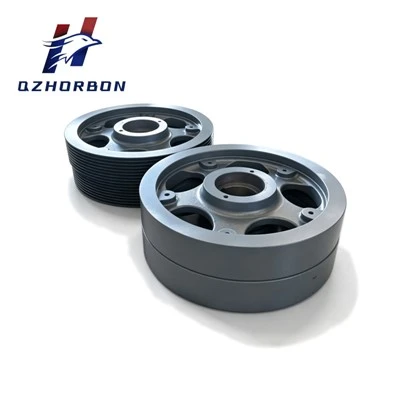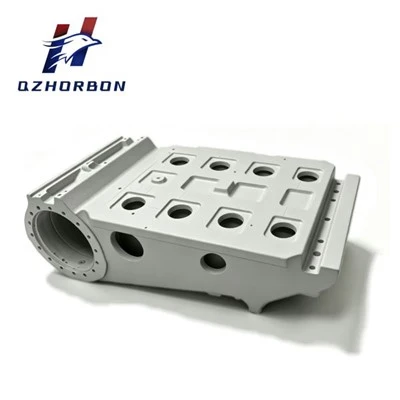

A jaw crusher rarely stops without warning. More often, the jaw crusher pitman has been telling you something for weeks: a bearing housing running a little hotter, a faint knock at the bottom of the stroke, a hairline mark near a bolt hole. By the time the pitman cracks, the repair is no longer a maintenance job. It is a heavy-casting replacement, a long lead time and days of lost production.
This guide explains what the pitman actually does, where it shows trouble first, and how to decide between repair and replacement. It also covers what to check before you buy a replacement in volume.

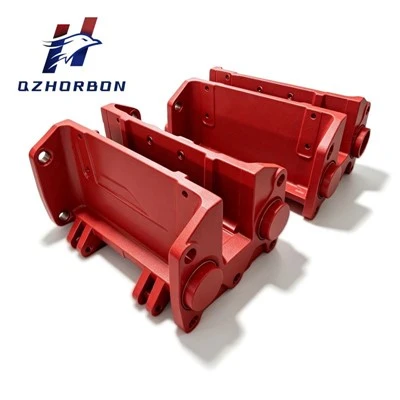
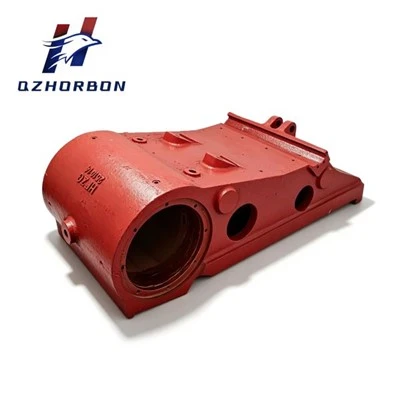
Horbon Jaw Crusher Pitman
What the Pitman Does in a Jaw Crusher
The pitman is the large moving casting that carries the movable jaw plate. In a single-toggle crusher, the top of the pitman sits on the eccentric shaft (an off-centre shaft that turns rotation into a swinging motion). The bottom rests against the toggle plate. Every revolution pushes the lower end toward the fixed jaw, which crushes the rock, then lets it fall back.
In a double-toggle design, the pitman hangs from a pivot shaft, and a separate eccentric shaft drives two toggle plates. The motion is more of a pure swing, but the pitman still carries the same crushing load.
This explains the pitman function in jaw crusher operation. It is not only a carrier for the jaw plate. It is the load path that passes crushing force from the shaft to the rock and back into the frame. Because it moves with every stroke, the pitman is built as a hollow or ribbed casting to keep weight down while staying strong.
The pitman also has several interfaces, meaning the points where it meets other parts:
the bearing seat at the top, where the eccentric shaft bearing sits
the toggle seat at the bottom
the face and bolt holes where the movable jaw plate is clamped
the contact surface behind the jaw plate
Almost every pitman problem starts at one of these four places, not in the middle of the casting. That is the key to reading early warnings.
Early Failure Signs: A Field Reading Table
The table below links what an operator sees to where the pitman is likely affected. The temperature figure is a commonly used maintenance reference rather than a universal limit. Always set your baseline from your own machine and follow the OEM manual.
| What you notice | Where to look | Likely cause | What to do |
|---|---|---|---|
| Pitman bearing runs about 15°C above its normal running temperature | Upper bearing housing | Low or contaminated oil, blocked grease line, early pitman bearing seat wear | Check lubrication first, then inspect seat fit |
| Knocking at the bottom of the stroke | Toggle seat and toggle plate | Worn seat, loose tension spring | Inspect seat depth and toggle plate; adjust springs |
| Dark lines or rust-coloured streaks near jaw plate bolt holes | Clamp face of the pitman | Loose jaw plate, fatigue starting | Clean, then use dye-penetrant or magnetic particle testing |
| Bearing outer ring has turned in the housing | Bearing seat bore | Bore has worn oversize | Measure bore; plan rebuild or replacement |
| Jaw plate keeps loosening after re-tightening | Contact face behind the plate | Worn backing plate or uneven seating | Replace backing; check face flatness |
If you see any jaw crusher pitman cracks, even a hairline one, stop and investigate. A crack in a loaded casting grows under every stroke.
A practical habit helps here: record bearing temperature at the same point each shift, under similar load. A single high reading means little. A slow upward trend over two or three weeks is the real signal.
What Wears the Pitman Out: Four Upstream Causes
Most buyers treat pitman failure as a casting-quality issue, and sometimes it is. But in many cases the pitman is the victim of something cheaper that was left too long.
1. Loose or over-worn jaw plates. Once a gap opens between the plate and the pitman face, the plate starts to hammer. That repeated micro-impact fatigues the clamp face and bolt holes. Timely flipping or replacement of the 【movable jaw plate】 protects the pitman behind it.
2. A worn backing plate. The material behind the jaw plate keeps it seated evenly. When it wears, the plate shifts slightly under load. Over time that movement damages the pitman face, which is far more expensive to fix than a backing plate.
3. Material build-up under the jaw. Packed fines at the discharge point load the pitman toe unevenly and speed up wear. Clear discharge chutes and check them as part of a routine walk-around.
4. Lubrication problems. Too little grease, too much grease and contaminated oil all raise bearing temperature. A bearing that overheats eventually spins or loosens in its seat, and the bore wears out of tolerance.
Notice what these four have in common: they are wear-part and lubrication issues, all visible and cheap to correct. A simple inspection rhythm (daily visual check, weekly bolt and backing check, scheduled oil analysis) prevents most expensive pitman damage.
Related wear parts matter too. The toggle plate is designed to break in a severe overload, and a cracked or deformed one lets the pitman swing out of control. The 【cheek plates】 and eccentric shaft should be inspected at the same time.
Repair, Rebuild or Replace: How to Decide
When you find damage, the real question is cost and downtime, not just whether the part can be fixed. Use this decision logic:
Repair on site is reasonable when the damage is limited to surface wear on the toggle seat or a replaceable liner or toe, and the main casting is sound and within dimension.
Rebuild (machining, sleeving or weld build-up of a worn bearing seat) can work when the casting is crack-free and the seat is only slightly out of size. The risk is that a rebuilt seat depends heavily on the quality of the weld and heat treatment. Ask your workshop for crack testing after the rebuild, not only before.
Replace when any of the following applies: a confirmed crack in the casting body, repeated bearing seat wear after a rebuild, or distortion that cannot be corrected by machining. Running a cracked pitman to save a week is where the largest failures begin.
For distributors and plant buyers, one cost control tip: the lead time of a casting is usually longer than the repair itself. If a machine is critical, it is often cheaper to hold one spare pitman than to pay for an emergency order and weeks of downtime.
Buying a Replacement Pitman: Checks That Matter
A pitman looks simple in a photo, but the quality sits in what you cannot see. When you compare suppliers, ask for these:
Material verification. Ask for spectrometer results on the chemical composition of the casting, so the grade matches the drawing.
Hardness and heat treatment records. HRC (Rockwell hardness) checks on critical areas confirm the casting was treated properly.
Flaw detection. Ultrasonic or magnetic particle inspection on the casting, especially near bolt holes and the bearing seat.
Dimensional report. A coordinate measuring machine (CMM) report on bearing seat bores, toggle seat and clamp face. Bearing seat tolerance directly decides how long the bearing lasts.
Drawing and part number match. For OEM-fit parts, confirm the original part number or a 3D drawing before production.
A worn pitman without a drawing is a common problem, especially for older machines or discontinued models. Some suppliers can reverse-engineer from the worn part: they measure it, rebuild the 3D model and issue 2D and 3D drawings for approval before casting. At Horbon, the first drawings can usually be prepared in about three days, which lets you confirm dimensions before production. For repeat orders, our 【OEM and custom service】 also supports laser logo marking and export packaging such as fumigated wooden cases.
A final practical tip: if the same area keeps cracking on your machine, tell the supplier about your feed material and duty. Material or section changes can sometimes extend life under severe impact, and that conversation is easier before the order than after.
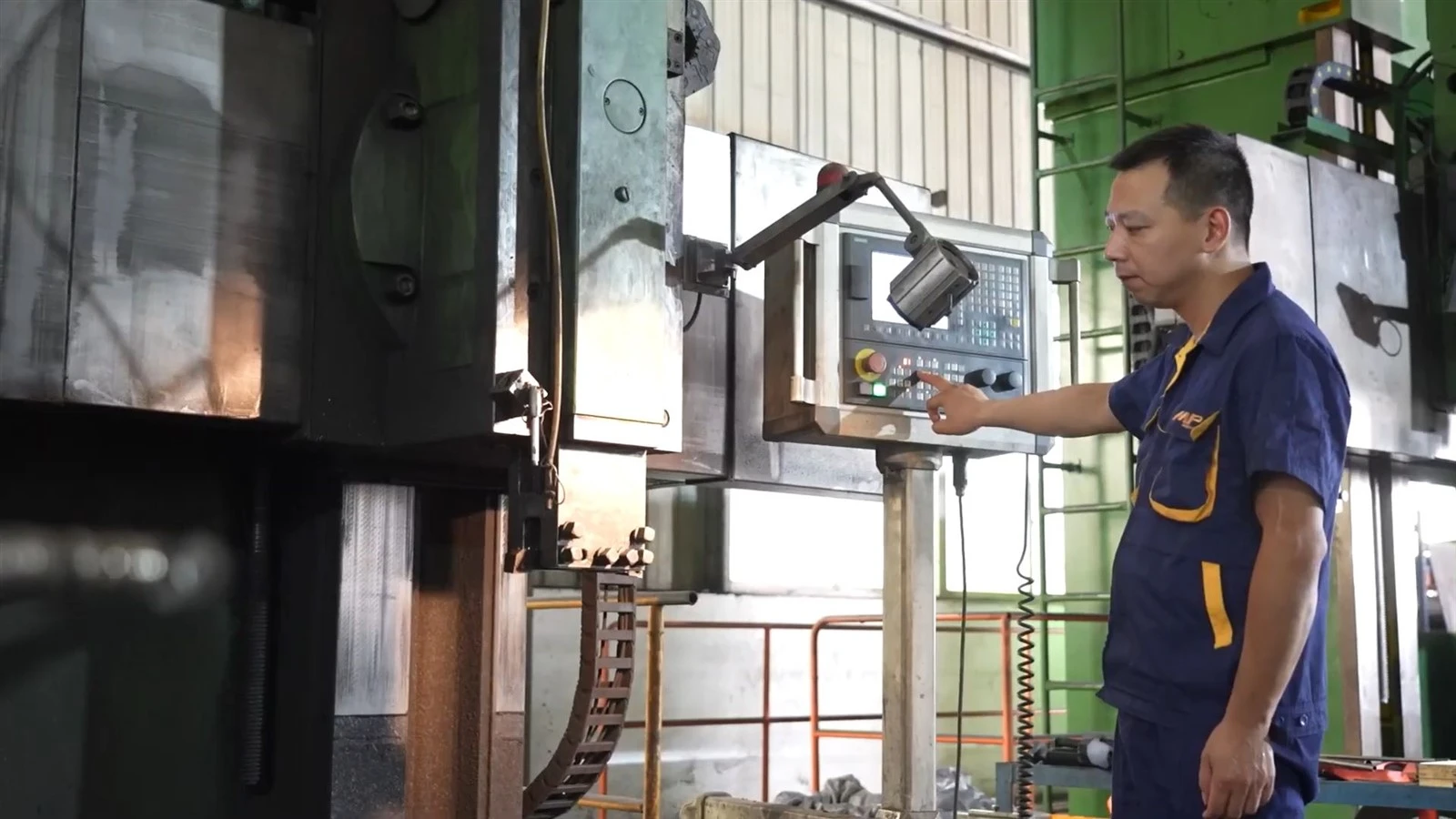
Machining crusher parts at the Horbon factory in Quzhou. Critical dimensions such as bearing seat bores are measured and recorded before the part is released.
Safety Note Before You Touch the Pitman
The pitman is heavy. In one MSHA fatality report, the pitman of a primary jaw crusher weighed about 4,750 pounds. Always lock the pitman with its hold pins or safety pin, isolate power and follow lockout procedures before removing any toggle seat or jaw plate. Never work beneath an unsupported pitman.
Summary: Your Action Plan
Log pitman bearing temperature each shift and watch the trend, not single readings.
Check jaw plate bolts, backing plates and discharge build-up weekly.
Inspect bolt holes, toggle seat and bearing seat at every liner change.
Treat any crack as a stop signal, not a monitor-and-wait item.
For critical machines, hold a spare pitman and a verified drawing on file.
When buying, request material, hardness, flaw detection and dimensional reports before you place a bulk order.
If you need a replacement or want a quote based on a worn sample, see our 【jaw crusher pitman】 range or send us the part number or the damaged part for measurement.
FAQ
What is the function of a pitman in a jaw crusher?
It carries the movable jaw plate and passes the eccentric shaft's motion and force to the rock being crushed. It is the main moving casting in the machine.
What causes a jaw crusher pitman to crack?
Common causes are loose jaw plates, a worn backing plate, material build-up, overload when the toggle plate fails to release, and fatigue at bolt holes. Poor casting quality can also be a factor.
Can a worn pitman bearing seat be repaired?
Sometimes. If the casting is crack-free and the seat is only slightly oversize, machining or build-up repair can work. If wear returns quickly or there are cracks, replacement is the safer choice.
How often should I inspect the pitman?
Check bearing temperature and sound every shift. Inspect bolt holes, toggle seat and bearing seat at each liner change, and use crack testing on high-duty machines on a regular schedule.