
A new set of cheek liners arrives, the crew swaps them out over a shift, and the crusher restarts. A week later someone hears a rattling "tink" from the chamber, or finds a bolt head sheared off, or notices that the swing jaw is scuffing the new plate. The liner itself was fine. What was missing was a set of checks before, during and after installation.
This guide walks through cheek liner installation as three checkpoints: incoming inspection, installation, and clearance checks. It also covers why cheek plate bolts loosen, how to judge a cheek plate wear limit, and what buyers should ask suppliers before placing a bulk order.
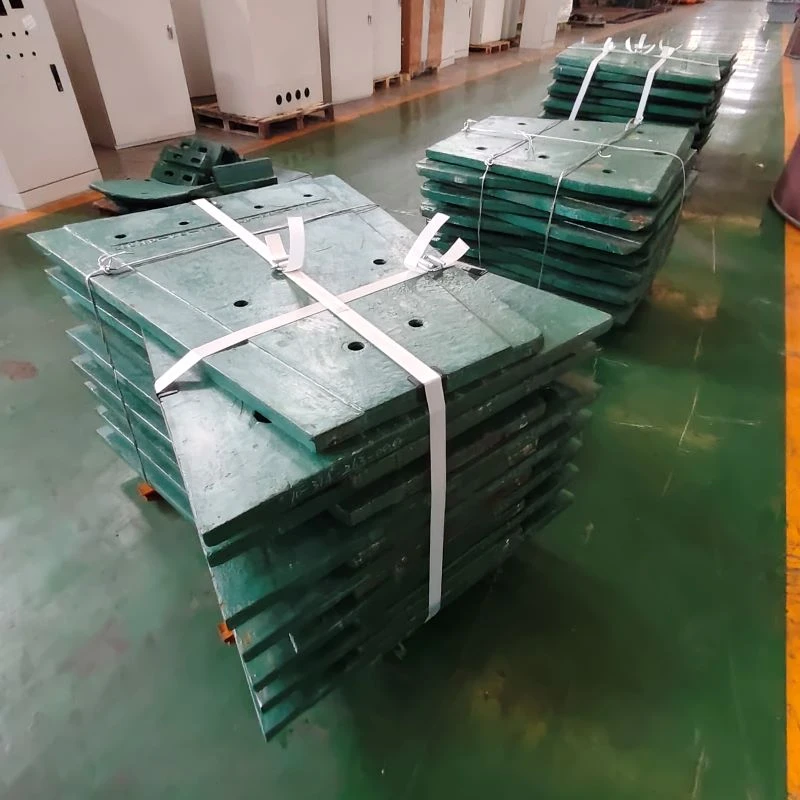
Horbon Crusher Cheek Liner
What Cheek Liners Do (and Why Small Errors Matter)
Cheek liners, also called cheek plates or side liners, are replaceable wear plates bolted to the side walls of the crushing chamber. They protect the frame from abrasion while the fixed and swing jaw plates crush rock between them.
They look simple, but they sit right beside a moving part. The swing jaw travels very close to them on every stroke. A plate that is slightly too thick, seated unevenly, or held by a loose bolt can cause metal-to-metal contact, vibration, or accelerated frame damage. Frame wear costs far more to repair than a plate costs to replace.
Checkpoint 1: Incoming Inspection Before You Touch the Crusher
Most installation problems start at the warehouse door, not in the crusher. Before the old plates come out, inspect the new ones.
1. Match the part number and drawing. Confirm the OEM part number, or the drawing, against the crusher model and the position of the plate (upper or lower, left or right). Many crushers use different upper and lower cheek liners, and left and right plates are often not interchangeable.
2. Check bolt holes and countersinks. Place the plate next to the old one if you can. Bolt hole positions and countersink depth should match. Countersinks that are too shallow leave bolt heads protruding into the material flow, where they wear quickly.
3. Measure thickness at several points. Thickness is not just a number for the wear limit. It also decides how much room the swing jaw has. Compare against the drawing, not against memory.
4. Review material and hardness records. Ask for a spectrometer report for the material and an HRC hardness reading. Manganese steel is common for cheek liners, but some applications call for other grades. If your old plates lasted unusually long or short, a material change may be worth discussing with your supplier.
5. Inspect for casting defects. Look for cracks, porosity and surface flaws, especially around bolt holes. Flaw detection reports are useful for plates that will see heavy impact.
6. Clean the seating surface. Fine dust and crushed fines packed behind the old plate stop the new one from seating flat. Clean the side wall plate down to bare metal before installation.
Practical tip: Keep a one-page receiving checklist for each batch. When a problem appears later, you will know whether it came from the plate or the installation.
Our quality control process in action: spectrometer, hardness, CMM and flaw detection on cheek liners before they leave the factory.
Checkpoint 2: Cheek Liner Installation, Step by Step
Always follow the manual for your crusher model. The sequence below covers the points that general guides tend to skip.
Lock out first. Stop the crusher, lock out and tag out the power, and secure the swing jaw against movement. If the swing jaw is binding against a cheek plate, releasing it can cause sudden movement. Treat every stuck component as stored energy.
Check the removal order. On many crushers the side cheek liners must come out before the fixed jaw plate can be lifted. Check the sequence in the manual before rigging anything, so nobody tries to force a jammed lift.
Use the right lifting points. Check that the lifting hole or lifting tool engages properly before taking any weight. If it does not lock, do not lift.
Expect stubborn plates. After the bolts are loosened, packed fines can hold the old plate in place. Free it with proper tools. Do not force it by lifting the whole machine.
Plan for the shelf. Lower cheek liners usually wear faster than upper ones. If you replace only the lower plates, a small step can form where it meets the upper plate and slow material flow. Check the join and decide whether to replace both.
Seat the new plate flat. Clean metal-to-metal contact is the goal. Do not tighten bolts to pull a crooked plate into position, because that creates stress and loosens quickly later.
Tighten in stages. Tighten bolts progressively, working across the plate, to the torque in the manual. Re-check after the first hours of operation.
Use fresh or inspected fasteners. Damaged threads, stretched bolts and worn nuts are the main source of cheek plate bolts loosening. Replace them when in doubt.
Checkpoint 3: Clearance Checks Before Restart
Clearance checks are the step most often missed. With the plates installed, confirm three things:
1. Plate-to-wall contact. The plate should sit firmly against the side wall plate. Use a feeler gauge or a thin steel shim at several points to confirm there are no gaps. A gap behind the plate lets it flex under load, which loosens bolts.
2. Swing jaw clearance. Move the swing jaw through its travel by hand or by a safe inching method, and watch the gap between the jaw and each cheek liner. There should be visible, even clearance throughout the stroke on both sides. If the jaw touches or scrapes, stop and find out why: wrong plate thickness, a plate not fully seated, or a jaw plate that is not correctly positioned.
3. Re-check at your working CSS. When you change the closed-side setting, the geometry changes. Check clearance at both your normal setting and the end of the adjustment range you plan to use.
After this, run the crusher empty and listen. A rhythmic metallic tick often means a loose bolt or a plate that is not seated. Stop and fix it before feeding rock.
Practical tip: Photograph each plate and the clearance readings at installation. That record helps when you compare wear rates between batches or suppliers.
Why Cheek Plate Bolts Loosen
Loose bolts are usually blamed on poor tightening, but the causes are broader:
Vibration and impact. A crusher is a constantly shaking machine. Bolts without correct preload slowly back off.
Poor seating. If the plate does not sit flat, bolts carry bending loads they were not designed for.
Worn bolt holes. Once a hole is elongated, that area of the plate will not stay tight. This is why checking bolt holes during installation matters.
Worn bolt heads. As the plate wears, the bolt head in the countersink wears with it, and clamping force falls.
Dimensional mismatch. Holes that are slightly off position force bolts to sit at an angle.
The answer is a routine. Inspect cheek plate bolts at every shift change early on, then on a schedule suited to your material and tonnage. If a bolt keeps loosening in the same spot, investigate the cause there rather than tightening it again.
Cheek Plate Wear Limit: When to Replace
There is no universal number, because chamber design and plate thickness vary by model. Use these working rules:
Follow the OEM minimum thickness. Measure at several points, not one.
Track the wear rate. Record thickness at each jaw plate change. Wear is rarely even, and the lower section often goes first.
Replace when geometry changes. If chamber shape is changing and affecting product size or flow, the plate is past its useful life.
Plan ahead. Order replacements when a plate has used a good part of its life, not when it is already thin. Lead times are the real cost of waiting.
Do not replace cheek plates automatically with every jaw plate change. Replace them according to measured wear and projected life.
Sourcing Checklist: How to Avoid Fit Problems
For distributors and bulk buyers, many installation complaints trace back to the order. Before confirming an order, ask:
Which standard is the plate made to? Provide an OEM part number or a drawing.
What dimensional tolerance do you hold on hole positions and thickness?
What inspection records come with each batch? Spectrometer, HRC, dimensional (CMM) and flaw detection reports.
Can you match a worn sample? If no drawing exists, a good supplier can reverse-engineer from a used plate.
What is the remedy for a fit problem? Ask about replacement policy and technical support during installation.
At Horbon, customers can order by part number or 3D drawing, or send a worn plate for reverse engineering and a first 2D/3D drawing in about 3 days. Production plates go through spectrometer, hardness, CMM dimensional and flaw inspection, with third-party inspection available. For customers who need to compare options, see our 【Crusher Cheek Liner】 range and the wider 【Cheek Plates】 category.
Summary: A Three-Point Routine You Can Use Next Shutdown
Before: Verify part number, hole positions, thickness, material and hardness records. Clean the seating surface.
During: Lock out, follow the correct removal order, seat the plate flat, tighten in stages.
After: Check plate-to-wall contact and swing jaw clearance at your working CSS, then listen on an empty run.
Add a short log for each installation. It turns cheek liner replacement from a repeated problem into a managed routine. For related reading, see our guide to 【jaw crusher wear parts】 and our article on 【fixed jaw plate wear and replacement】.
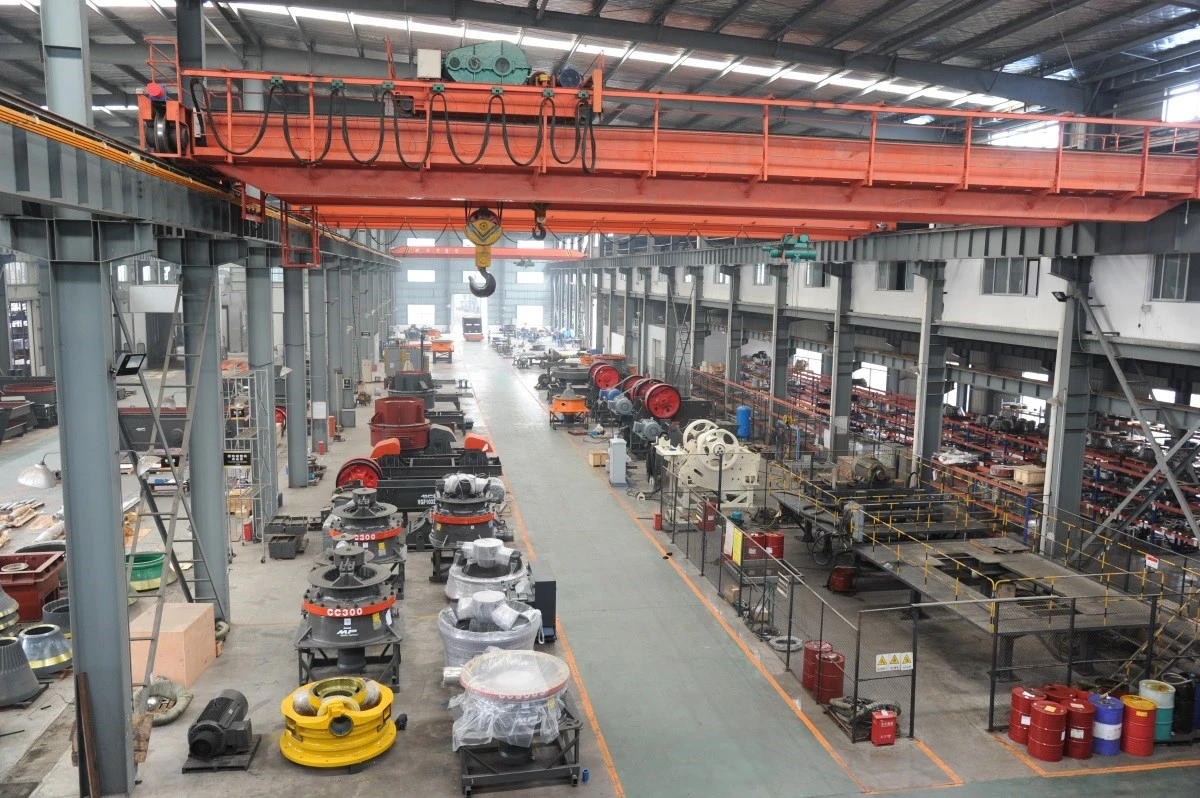
Inside Horbon's factory in Quzhou
FAQ
How often should cheek liners be replaced?
There is no fixed interval. It depends on material abrasiveness, feed distribution and chamber design. Measure thickness at every jaw plate change, track the wear rate, and replace based on the OEM minimum thickness.
Should I replace cheek plates every time I replace jaw plates?
Not necessarily. Inspect them at each jaw plate change. If measured thickness and projected life will carry to the next change, they can stay. Replace them if they will not.
Why do cheek plate bolts keep coming loose?
Common causes are a plate that is not seated flat, worn or enlarged bolt holes, worn bolt heads, and damaged fasteners. Find the cause rather than only re-tightening.
Can lower and upper cheek liners be replaced separately?
Yes, but lower plates usually wear faster, and replacing only one can leave a step that slows material flow. Check the joint when you decide.
Can Horbon make cheek liners if I only have a worn plate?
Yes. Send the worn plate and we can reverse-engineer it and produce drawings, usually in about 3 days, then manufacture to your requirements.