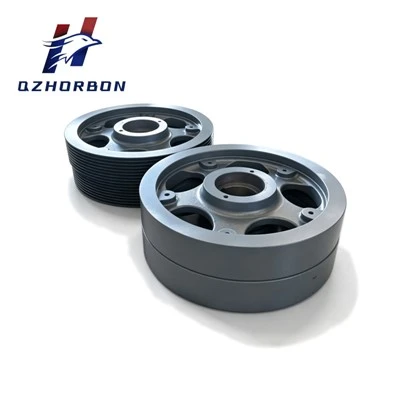

Replacing a crusher rotor sounds straightforward until the wrong rotor arrives at the site. The crusher model may be correct, the rotor diameter may look close, and the overall assembly may appear similar-but a mismatch in the shaft bore, bearing interface, hammer slot, port geometry, or balance condition can turn a planned maintenance job into unexpected downtime.
For this reason, choosing a replacement crusher rotor should not start with price or rotor diameter alone. A safer approach is to verify compatibility through a clear chain of evidence: crusher model → part number → rotor configuration → critical dimensions → application requirements. This method is especially important for mining contractors, aggregate producers, maintenance teams, and distributors purchasing replacement rotors in batches.
This guide explains how to select a replacement crusher rotor, compare model specifications, decide between a complete assembly and a rebuild, and prepare the information a manufacturer needs before production.
1. Why the Crusher Model Alone Is Not Enough
The first mistake buyers make is treating the machine model as the complete specification. It is an important starting point, but it is not always enough to identify the correct replacement rotor.
Manufacturers commonly define an impact crusher using several rotor-related parameters, including rotor diameter, rotor width, number of blow bars or hammers, feed opening, drive power, and capacity. For example, published equipment specifications from major crusher manufacturers show that rotor diameter and width are normally listed together because both dimensions affect the crushing chamber and material flow.
A replacement rotor, however, must also fit the mechanical interfaces around it. These may include the main shaft, bearing seats, shaft bore, hammer slots, wedge system, drive connection, or VSI port geometry. Two rotors with similar outside dimensions can therefore have completely different installation requirements.
The practical rule is simple: use the crusher model to identify the candidate rotor, but use the part number and critical dimensions to confirm it.
2. Step One: Identify Your Rotor Platform
Before comparing specifications, determine whether your machine uses a horizontal impact crusher (HSI) rotor or a vertical shaft impact crusher (VSI) rotor.
An HSI rotor uses rotating hammers or blow bars to deliver impact energy to the feed material. Rotor body strength, hammer configuration, shaft condition, and the geometry of the hammer mounting system are important considerations.
A VSI rotor works differently. Feed material enters the center of the rotor and is accelerated outward through ports or channels at high speed. Rotor configuration, port geometry, wear surfaces, and rotational balance are therefore critical.
This distinction matters because HSI and VSI replacement rotors are not interchangeable simply because their outside dimensions appear similar.
Horbon also supplies VSI crusher rotors for compatible VSI applications.

3. Replacement Crusher Rotor Model and Specification Comparison
The following examples illustrate how a buyer should read a rotor specification. They are model-specific reference specifications, not universal dimensions for all crushers. Final compatibility should always be confirmed against the actual machine and part number. Horbon currently lists the following reference assemblies for PFC14
|
Item |
PFC1415P HSI Rotor |
MP VSI4000 Rotor |
|
Crusher type |
Horizontal Impact Crusher |
Vertical Shaft Impact Crusher |
|
Assembly Part No. |
2105070001 |
2103030016 |
|
Rotor configuration |
4-row plate hammer |
4-port / 4-channel |
|
Rotor diameter |
Ø1368 mm |
Ø840 mm |
|
Overall assembly length / height |
2807 mm overall assembly length |
448 mm rotor height |
|
Shaft-related dimension |
Main shaft assembly |
Ø390 mm inner shaft bore / Ø420 mm outer shaft bore |
|
Total assembly weight |
8,150 kg |
Not stated on the referenced page |
|
Main wear/working system |
Plate hammers and wedge blocks |
Port wear plates, trail plates, tip holders and related wear components |
|
Assembly components |
44 parts |
25 parts |
The table shows why "rotor size" is only part of the purchasing decision. The PFC1415P reference assembly, for example, includes a 4-row plate-hammer configuration, main shaft, bearings, wedge blocks, seals and drive pulley. The VSI4000 assembly uses a four-channel rotor design with defined shaft-bore dimensions and balance-adjustment provisions.
When preparing a purchase inquiry, do not send only "PFC1415P rotor" or "VSI4000 rotor." Include as much identification information as possible.
4. The Seven Specifications to Confirm Before Ordering
4.1 Crusher make and model
Start with the manufacturer, machine family, exact model and, when available, serial number. This establishes the equipment platform from which the replacement rotor will be selected.
4.2 Part number
The original part number is one of the most useful pieces of information for aftermarket procurement. A part number can distinguish between visually similar components designed for different configurations. It also reduces the risk of selecting a rotor based only on marketing descriptions.
4.3 Rotor diameter and width or height
Measure or verify the principal rotor dimensions against the engineering drawing. Manufacturer specifications commonly publish rotor diameter together with width, and these dimensions are directly related to the crushing chamber.
Do not assume that a difference of only a few millimeters is acceptable. The correct tolerance depends on the machine design and interface.
4.4 Shaft bore and shaft interface
For many replacement rotors, shaft-related dimensions are more important than the external diameter. A shaft bore is the machined opening through which the shaft interfaces with the rotor; its geometry and tolerance affect concentricity and fit.
For the referenced VSI4000 rotor, for example, Horbon specifies a Ø390 mm inner shaft bore and Ø420 mm outer shaft bore.
4.5 Rotor configuration
Record the number and arrangement of hammers, blow bars, or VSI ports. A four-row HSI rotor and a four-port VSI rotor represent fundamentally different designs, so configuration must be confirmed before quotation.
4.6 Wear-part interface
Check hammer slots, wedge blocks, wear plates, trail plates, tip holders, or other replaceable components. The contact geometry must match the rotor body. A wear component that appears correct but does not seat properly can create uneven loading and premature damage.
4.7 Balance requirement
A rotor is a rotating mass, not simply a cast component. Balance problems can increase vibration and impose additional loads on bearings and other drivetrain components. Formal rotor repair procedures in the industry commonly include dynamic balancing and quality inspection.
For Horbon assemblies, the documented quality process includes dimensional inspection of critical surfaces, hardness testing, non-destructive flaw detection, and balance verification before shipment.
5. Complete Replacement or Rotor Rebuild?
A replacement crusher rotor does not always mean replacing the entire assembly. The right choice depends on the condition of the rotor body and the remaining serviceability of its components.
Choose a complete rotor assembly
when the rotor body has structural cracks, excessive bore wear, serious deformation, or other damage that makes continued operation unreliable. It may also make economic sense when an aging rotor requires repeated repair and the accumulated cost of wear components and maintenance becomes too high.
Choose a rotor rebuild or wear-parts replacement
when the main rotor body remains structurally sound. For an HSI rotor, this may involve replacing plate hammers, wedge blocks and seals. For a VSI rotor, typical replaceable items can include wear plates, trail plates, wear rings, tip holders and distributor-related components. Horbon describes these three intervention levels-complete assembly, wear-parts rebuild, and single-component replacement-as separate procurement strategies.
This distinction can substantially improve cost control. Instead of asking only, "How much is a replacement rotor?", ask, "Which components actually need replacement to return the machine to reliable service?"
When the rotor body remains structurally sound, replacing selected replacement crusher rotor components can be a more economical maintenance strategy.

6. What If You Do Not Have the Original Drawing?
This is a common problem with older machines, used equipment and aftermarket replacement projects. The absence of a drawing does not necessarily mean that you must abandon the project.
Provide the manufacturer with the crusher make and model, existing part number, photographs, key measurements, and the damaged rotor or individual component when possible. Some manufacturers can also work from a worn sample or perform reverse engineering to recreate the required geometry.
Horbon specifically supports production based on an original part number or engineering drawing and can also use a damaged component for reverse-engineering and remodelling when drawings are unavailable. The company's technical information states that an initial 2D/3D drawing can generally be prepared within about three days after receiving the requirement.
For an overseas distributor, this capability is particularly useful when supporting customers with discontinued models or equipment that has been modified over its service life.
7. A Practical Purchasing Checklist for Distributors and Bulk Buyers
For B2B buyers, the goal is not simply to identify one rotor. The better approach is to create a repeatable specification package that can be used for future orders.
Before requesting a quotation, prepare the following information:
- Crusher manufacturer and exact model
- Machine serial number, if available
- Original rotor part number
- Rotor type: HSI or VSI
- Rotor diameter and width/height
- Shaft, bore and bearing interface dimensions
- Hammer/blow-bar rows or VSI port configuration
- Current wear or damage condition
- Required scope: complete assembly, rotor body, rebuild parts, or individual components
- Engineering drawing, exploded diagram or photographs
- Expected quantity and delivery schedule
For distributors, it is also useful to consolidate several related spare parts into the same purchasing cycle. A replacement rotor may need to be shipped together with wear parts, shafts, bearings, fasteners or other crusher components. Horbon currently manufactures across these categories and supports consolidated shipments through Shanghai or Ningbo under FOB or CIF terms.
For distributors and high-volume buyers, working with a manufacturer that provides [OEM & Custom Parts Service]can simplify custom drawings, reverse engineering, packaging and recurring supply requirements.
8. How to Control Replacement Rotor Cost
The lowest quotation is not necessarily the lowest-cost procurement option. A cheaper rotor that requires dimensional correction, additional machining, delayed installation, or emergency re-shipment can become more expensive than a correctly specified assembly.
A better comparison should include unit price, inspection requirements, lead time, shipping, replacement scope, documentation, and the potential cost of downtime.
For quality control, ask the supplier how critical dimensions are inspected and what documentation is available. Horbon states that its process includes optical emission spectral analysis for incoming materials, CMM inspection of critical machined surfaces, HRC hardness testing, non-destructive flaw detection and balance verification.
For bulk purchasers, consistency between batches can be just as important as the price of the first order. A stable supplier should be able to reproduce the same geometry, material specification and inspection requirements for subsequent production.

Conclusion: Match the Rotor by Evidence, Not Appearance
The safest way to choose a replacement crusher rotor is to treat compatibility as a verification process rather than a visual comparison. Start with the crusher model, confirm the part number, identify the rotor configuration, check the critical dimensions and shaft interfaces, and verify the balance and inspection requirements.
Most importantly, do not assume that a rotor with the correct diameter is automatically the correct replacement. The critical question is whether the complete mechanical interface and operating configuration match your crusher.
For a straightforward order, provide the crusher make, model and part number. For older or modified equipment, add drawings, photographs, measurements or a worn sample. When the rotor body is still serviceable, compare the economics of a rebuild before ordering a complete assembly. For distributors and high-volume buyers, standardizing this information into a repeatable purchasing checklist can reduce both procurement errors and unplanned downtime.
If your team is unsure which replacement crusher rotor model is suitable, provide the machine model, part number and available dimensions or drawings to the manufacturer before production. That simple verification step is often the most effective way to avoid buying the wrong rotor.
Ready to Confirm Your Replacement Crusher Rotor?
Before requesting a quotation, please provide your crusher make and model, original part number, technical drawings, photos, or available dimensions whenever possible. These details help us verify the rotor configuration and key dimensions before production. If you do not have a complete drawing or part number, you can still send us the information and photos available from your existing rotor, and our technical team can help identify the required specifications.
For bulk orders and distributor inquiries, you can also include the required quantity and delivery requirements so that we can recommend a suitable production and supply solution. Request a Quote
fAQ
Q:1.How do I choose the right replacement crusher rotor?
Start with the crusher make and model, then confirm the original part number, rotor configuration, critical dimensions, shaft interface and wear-part geometry. Do not select a rotor by diameter alone.
Q:2.What information should I send to a replacement rotor manufacturer?
At minimum, provide the crusher manufacturer, exact model and part number. Engineering drawings, photographs, dimensions, machine serial numbers and worn samples are useful when available. Horbon accepts model and part-number information as well as drawings or worn components for compatibility confirmation.
Q:3.Should I buy a complete rotor assembly or only wear parts?
Buy a complete assembly when the rotor body has structural damage, excessive bore wear or cracks. When the rotor body remains sound, replacing the applicable wear parts can be a more economical maintenance strategy.
Q:4.Does a replacement crusher rotor need to be balanced?
Balance verification is an important part of rotor quality control because the rotor is a high-speed rotating assembly. The exact balancing requirement depends on the rotor design and the manufacturer's specifications. Horbon states that complete rotor assemblies undergo balance verification before dispatch.
Q:5.Can a manufacturer make a replacement rotor without the original drawing?
In some cases, yes. A manufacturer with reverse-engineering capability may be able to work from a damaged sample, photographs and measurements, then recreate the necessary 2D/3D geometry for production. Horbon's stated OEM/ODM service includes reverse engineering from worn components when drawings are unavailable.
A:Computer Numberical Control (CNC) machining is a manufacturing process in which pre-programmed computer softeare dictates the movement of fact`ory tools and machinery. The process can be used to control a range of complex machinery, from girnders and lathes to mills and CNC routers.