

Three suppliers quote three different prices for the same crusher rotor. One offers the lowest unit price, another promises a longer service life, and the third has a shorter lead time. Which one should you choose?
For B2B buyers, distributors, and mining equipment procurement teams, this is one of the most common crusher rotor purchasing challenges. A lower quotation does not automatically mean a lower procurement cost. Differences in material, machining, inspection, packaging, freight, lead time, and expected service life can significantly change the actual cost of a replacement crusher rotor.
The better approach is to compare the total procurement cost, not just the unit price.
This guide explains how to evaluate crusher rotor quotations, build a realistic purchasing budget, control hidden costs, and select the right supplier for long-term operations.
1. Why Crusher Rotor Prices Can Vary So Much
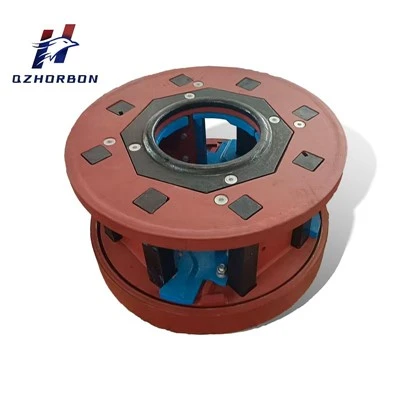
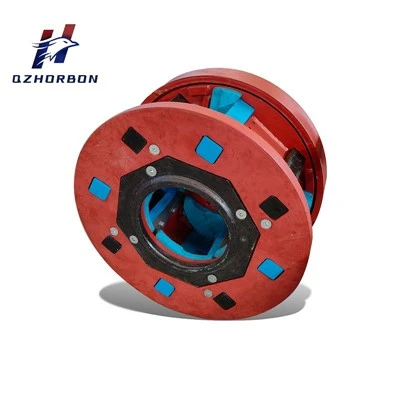
A crusher rotor is a critical rotating component, not a simple replacement part. Its price depends on much more than the weight of the steel.
When comparing a crusher rotor price, buyers should review at least these factors:
Material grade: Different applications may require high-manganese steel, chrome-molybdenum alloy steel, or other wear-resistant materials. Material chemistry and heat treatment can affect both the purchase price and expected service life.
Rotor configuration: A complete rotor assembly may include the rotor body, shaft, wear components, fasteners, and other associated parts. Two suppliers may quote different scopes while using similar product names.
Casting and machining: Precision casting, CNC machining, balancing, and dimensional control add manufacturing cost but may reduce installation and operational problems later.
Inspection requirements: Material verification, hardness testing, dimensional inspection, and non-destructive testing can increase the initial quotation while reducing quality-related procurement risk.
Order quantity: MOQ and batch size can influence unit price, production efficiency, and inventory cost.
Delivery terms: FOB, CIF, freight, customs handling, and packaging can all affect the final landed cost.
For this reason, simply asking "What is the crusher rotor price?" is usually not enough. A more useful question is:
"What will this crusher rotor actually cost us from purchase to installation and replacement?"
【Crusher Rotor Parts & Components】 can be used here to guide buyers who need to understand exactly what should be included in a rotor quotation.

2. Compare Crusher Rotor Quotes on a Like-for-Like Basis
One of the easiest ways to make a purchasing mistake is to compare quotations with different specifications.
Suppose Supplier A quotes a complete rotor assembly, Supplier B quotes the rotor body only, and Supplier C excludes inspection and export packaging. Supplier C may appear to offer the lowest crusher rotor price, even though its final landed cost is higher.
Before comparing suppliers, create a standardized RFQ.
A practical comparison table should include:
| Cost Item | Supplier A | Supplier B | Supplier C |
|---|---|---|---|
| Rotor / rotor assembly | |||
| Compatible crusher model | |||
| Part number | |||
| Material grade | |||
| Heat treatment | |||
| Machining | |||
| Balancing | |||
| Inspection | |||
| Export packaging | |||
| Freight | |||
| Incoterm | |||
| MOQ | |||
| Lead time | |||
| Expected service life | |||
| Estimated landed cost |
This approach changes the procurement conversation from "Who has the lowest price?" to "Who provides the best cost-performance combination?"
For B2B procurement, this is especially important when purchasing multiple crusher rotors or placing repeat orders with overseas suppliers.
3. Calculate the Real Crusher Rotor Procurement Cost
A useful crusher rotor budget should include more than the supplier's quoted price.
A practical calculation is:
Real Procurement Cost = Product Cost + Inspection + Packaging + Freight + Import/Handling Costs + Inventory Cost + Downtime Risk
Not every project will require every item, but the principle is important.
Product cost
This is the supplier's basic quotation for the rotor or rotor assembly.
Logistics cost
International buyers should consider freight, port charges, inland transportation, customs-related expenses, and delivery terms. A factory price can look attractive until transportation is added.
Inspection cost
For critical crusher parts, buyers may request additional testing or third-party inspection. These expenses should be included in the procurement budget from the beginning.
Inventory cost
A large order may reduce the unit price but increase the amount of capital tied up in inventory. This is particularly important for distributors and spare-parts wholesalers.
Downtime risk
This is often the most underestimated cost.
If an incorrect rotor causes installation problems or a delayed delivery keeps a crusher out of operation, the financial impact may exceed the original component price by a large margin.
The objective is therefore not to minimize the purchase price at all costs. It is to make the total cost more predictable.
4. Don't Ignore Cost per Ton
For mining and aggregate operations, unit price is only one part of the economic equation.
A better performance indicator can be:
Cost per Ton = Rotor-Related Cost ÷ Material Processed
Consider an illustrative example.
Supplier A offers a crusher rotor for $10,000, while Supplier B offers one for $11,500. At first glance, Supplier A appears to be the obvious choice.
However, suppose the first rotor requires replacement significantly earlier under the same operating conditions. If Supplier B delivers a longer service interval, the additional upfront investment may be economically justified.
The purpose of this calculation is not to assume that a more expensive rotor is always better. Instead, buyers should compare:
Purchase Price + Expected Service Life + Maintenance Frequency + Replacement Frequency
This is why a professional crusher rotor procurement decision should be based on expected operating economics rather than price alone.
For customers reviewing the complete range of crusher components, the 【Crusher Parts Buying Guide】 can provide a useful starting point for comparing critical replacement parts.
5. OEM, Aftermarket, or Custom Crusher Rotor?
Choosing the right sourcing model is another major budget decision.
OEM crusher rotor
OEM parts can be appropriate when strict factory specifications, documentation, and direct equipment compatibility are priorities. However, buyers should evaluate the commercial value of the OEM route rather than assuming it is always the most economical option.
Aftermarket crusher rotor
A qualified aftermarket supplier may provide compatible replacement parts with more flexible pricing and sourcing options. The key is to verify specifications, material, dimensions, quality control, and manufacturing capability.
Custom crusher rotor
Customization becomes particularly useful when the original part is obsolete, the crusher has been modified, or the operating environment creates unusual wear or impact conditions.
For example, a buyer may have an original part number or drawing. In that case, the manufacturing process can be based directly on the supplied technical information.
However, some older plants have a different problem: they only have a damaged rotor and no usable drawing.
In this situation, reverse engineering can be a practical procurement solution. Instead of replacing the equipment or paying for a highly expensive one-off sourcing route, the buyer can provide the damaged component for measurement, modeling, and reproduction.
Horbon supports OEM and customized production, including production based on customer drawings or part numbers. For customers without drawings, the factory can use damaged parts for reverse engineering and create new 2D/3D models.
【OEM Crusher Rotor Solutions】 can be linked here to capture buyers who are evaluating custom sourcing options.

6. MOQ: When Buying More Saves Money-and When It Doesn't
For distributors and bulk buyers, MOQ can strongly influence purchasing economics.
A higher order quantity may reduce the unit price, improve production efficiency, or lower the average logistics cost. But buying more is not automatically better.
Consider these questions before increasing the order size:
How fast do we consume the rotor?
How much warehouse space is available?
Will the crusher model remain in operation over the next 12–24 months?
How much working capital will be tied up in inventory?
Does the lower unit price justify the additional inventory cost?
For example, a distributor may benefit from a larger batch because several customers use the same compatible rotor. A mining site with low annual demand may prefer a smaller order even when the unit price is slightly higher.
A flexible supplier can make this decision easier.
Horbon's current manufacturing information indicates an MOQ as low as 5 pieces and access to stocked products, giving bulk buyers more flexibility when planning purchase quantities.
7. Quality Control Is a Budget-Control Tool
Quality inspection should not be treated as a separate technical issue. It is part of procurement cost control.
For crusher rotors, buyers should consider asking suppliers how they verify:
Material composition: Spectral analysis can help confirm whether the supplied alloy matches the agreed material requirements.
Hardness: HRC testing provides an indication of material hardness and helps verify heat-treatment results.
Dimensions: CMM inspection can verify critical dimensions and tolerances against drawings.
Internal defects: Non-destructive testing can help detect potential defects that may not be visible externally.
These checks matter because a low-cost rotor that fails during installation or operation is not a low-cost purchase.
A professional supplier should be able to explain not only what material is used, but also how the material, dimensions, and finished product are verified.
Horbon's documented quality-control capabilities include raw-material spectral analysis, HRC hardness testing, CMM dimensional inspection, flaw detection, and third-party inspection.
For buyers comparing suppliers, Crusher Rotor Quality Inspection Checklist is a useful internal link opportunity.
8. Lead Time Can Be More Expensive Than a Higher Unit Price
Lead time is one of the most overlooked variables in crusher rotor procurement.
Imagine two suppliers:
Supplier A: lower price, 60-day delivery
Supplier B: slightly higher price, 20-day delivery
If the crusher is already operating normally and the rotor is being purchased as planned inventory, Supplier A may still be attractive.
But if the rotor is needed for an urgent replacement, the calculation changes completely.
This is why buyers should separate orders into different categories:
- Planned replacement: focus on unit economics and inventory efficiency.
- Safety stock: focus on availability and predictable replenishment.
- Emergency replacement: prioritize lead time, specification accuracy, and logistics reliability.
Horbon's current production information indicates a standard production lead time of approximately 15–30 days, with regular stock availability and FOB/CIF shipping options from Shanghai or Ningbo.
The most suitable supplier is therefore not necessarily the one with the lowest quotation. It is the one whose delivery model matches the operational risk of the buyer.

9. Packaging and Export Details Also Affect Your Budget
For large and heavy crusher components, packaging is not a cosmetic issue.
The buyer should confirm:
- Rust prevention
- Protection of machined surfaces
- Lifting and handling requirements
- Export-standard packaging
- Wooden case or steel-frame packaging
- Labeling and part identification
Poor packaging can create additional repair, cleaning, handling, or installation costs after arrival.
For overseas buyers, custom export packaging can also improve warehouse handling and protect the product during long-distance transportation.
Horbon supports customized packaging, including fumigated wooden cases and steel-frame packaging for heavy machinery components.
10. A Practical Crusher Rotor Procurement Checklist
Before placing a purchase order, ask the supplier to confirm the following:
1. Application
Crusher brand, model, application, material characteristics, and operating conditions.
2. Identification
Part number, drawing, dimensions, or photographs of the existing rotor.
3. Scope of supply
Rotor body, shaft, wear components, fasteners, balancing, and any other included items.
4. Material
Material grade, chemical composition, heat treatment, and special material requirements.
5. Inspection
Material testing, hardness testing, dimensional inspection, balancing, and NDT requirements.
6. Commercial terms
Unit price, MOQ, payment terms, Incoterm, packaging, freight, and estimated landed cost.
7. Delivery
Production lead time, stock availability, shipping port, and estimated transit time.
8. Customization
OEM marking, packaging, material customization, or reverse engineering requirements.
9. Service support
Installation documentation, technical support, and response process in case of quality issues.
For large B2B orders, getting these details confirmed in writing can prevent many avoidable procurement disputes later.
Conclusion: Buy the Lowest Predictable Cost, Not the Lowest Quote
Crusher rotor procurement should not be reduced to a single number on a quotation sheet.
A smarter purchasing decision compares the complete cost structure, expected service life, inspection standards, MOQ, inventory requirements, lead time, logistics, and operational risk.
Before choosing a supplier, standardize the quotation scope. Then calculate the landed cost and compare the expected cost per ton or replacement cycle. Finally, evaluate whether the supplier can consistently deliver the required specification, quality, and lead time.
The lowest crusher rotor price may win the quotation.
The lowest predictable total cost is what improves procurement performance.
For B2B buyers, distributors, and mining equipment companies looking for a reliable manufacturing partner, 【Customized Crusher Rotor Manufacturer】 can be the next step for reviewing specifications, quantities, and sourcing requirements.
FAQ
How much does a crusher rotor cost?
There is no single standard crusher rotor price. Cost depends on crusher model, rotor size, material, machining requirements, wear components, inspection, order quantity, packaging, and shipping terms. The best approach is to request a detailed quotation based on the exact part number, drawing, or application.
What information should I provide when requesting a crusher rotor quotation?
At minimum, provide the crusher brand and model, rotor part number if available, drawings or dimensions, required quantity, application, and delivery destination. Photos or a damaged original component can also be useful when drawings are unavailable.
Is an aftermarket crusher rotor a good alternative to an OEM rotor?
It can be, provided the supplier can demonstrate dimensional compatibility, appropriate material selection, controlled manufacturing, and adequate inspection. Buyers should compare complete specifications and expected operating performance rather than comparing price alone.
Can a replacement crusher rotor be manufactured without the original drawing?
Yes, depending on the supplier's reverse-engineering capability. A damaged original rotor can sometimes be measured, modeled, and reproduced. This can be particularly useful for older crushers or discontinued parts. Horbon supports reverse engineering and can develop 2D/3D drawings from customer-supplied components.
How can I reduce crusher rotor procurement costs?
Start by standardizing supplier quotations, comparing landed cost instead of unit price, selecting the right order quantity, verifying quality before shipment, and matching the supplier's lead time to your operational requirements. For distributors, combining repeat demand into planned bulk orders can also help improve purchasing efficiency.