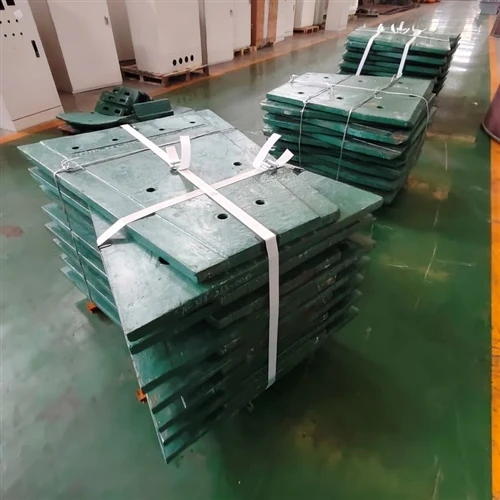


Replacing a crusher rotor is rarely a simple spare-parts purchase. For a mining, quarrying, cement, recycling, or aggregate operation, the wrong rotor can create much larger costs than the purchase price itself. Poor dimensional accuracy may make installation difficult, incorrect material selection can shorten service life, and insufficient balancing can increase vibration and accelerate bearing or structural wear. For distributors and other high-volume buyers, inconsistent quality between batches can create an even bigger problem.
This raises a practical question: when comparing replacement crusher rotor brands and suppliers, which option is actually more reliable?
The answer is not simply "the OEM" or "the cheapest aftermarket supplier." The more useful comparison is between three sourcing options: the original equipment manufacturer (OEM), a specialist aftermarket crusher parts manufacturer, and a generic supplier or trading company. Each can be suitable in different situations, but reliability depends on what the supplier can actually prove about the rotor rather than what its marketing claims.

OEM vs. Aftermarket vs. Generic Suppliers: Which Is More Reliable?
An OEM rotor is produced by the original crusher manufacturer or within its authorized supply chain. Its biggest advantage is established compatibility with the original machine design, documentation, and specifications. For critical machines where downtime is extremely expensive, OEM purchasing can be a straightforward risk-reduction strategy. The downside is that OEM parts may come with higher prices, longer lead times, or less flexibility for customized materials and production quantities.
A specialist aftermarket manufacturer takes a different approach. Instead of owning the crusher brand, the manufacturer produces replacement components according to the required machine model, part number, drawing, dimensions, material specification, and operating conditions. Some specialist suppliers provide OEM-compatible rotating assemblies, balancing documentation, dimensional inspection, and material verification. Current aftermarket suppliers illustrate this model clearly: rotor manufacturers may focus on critical interfaces, dynamic balancing, and inspection rather than simply selling a lower-priced replacement.
A generic supplier or trading company may offer attractive pricing and a wide product range, but the buyer needs to establish who actually manufactures the rotor, what inspection is performed, and whether the supplier controls the process. A trading company is not automatically unreliable, but the more production steps are outsourced without transparent quality control, the harder it becomes for a buyer to verify consistency.
For B2B purchasing, the key question is therefore not "OEM or aftermarket?" but "Which supplier can demonstrate that the replacement crusher rotor will fit, perform, and remain consistent from one batch to the next?"
| Evaluation Factor | OEM | Specialist Aftermarket Manufacturer | Generic Supplier / Trader |
|---|---|---|---|
| Machine compatibility | Usually strong | Strong when specifications are verified | Highly variable |
| Material customization | Usually limited to standard specifications | Often flexible | Depends on source factory |
| Dimensional control | Established | Can be strong with documented inspection | Must be verified |
| NDT and material testing | Usually available | Should be available | Not always transparent |
| Dynamic balancing | Usually part of engineering standards | Should be specifically confirmed | May not be clearly documented |
| MOQ and batch flexibility | Often less flexible | Usually more flexible | Often flexible, but source may vary |
| Lead-time flexibility | Can be longer | Often more adaptable | Depends on supplier chain |
| Price | Usually highest | Often competitive | Often lowest |
| Best fit | Critical OEM-standard replacement | B2B, distributors, customized and repeat sourcing | Price-sensitive purchases requiring strong due diligence |
1. Compatibility Should Come Before Brand Reputation
The first test for any replacement crusher rotor is compatibility. A well-known brand does not make a rotor reliable if the actual component is not correctly matched to the machine.
Buyers should provide the crusher model, rotor part number, existing drawing, critical dimensions, and operating information whenever possible. For example, the supplier may need to confirm shaft dimensions, bearing interfaces, rotor body geometry, wear component locations, and other critical fit points. Some suppliers explicitly support purchasing by part number or machine model, while others manufacture rotor assemblies to original specifications.
This is particularly important when buying aftermarket crusher rotors because "OEM replacement" and "OEM compatible" are not sufficient by themselves. Ask the supplier exactly what information was used to manufacture the part and whether the critical dimensions were inspected after machining.
For buyers without current drawings, reverse engineering can also be a practical solution. A manufacturer with engineering and measurement capabilities may be able to rebuild the design from an existing damaged component rather than forcing the buyer to recreate old documentation.
2. Material Quality Is More Than a Steel Grade
When comparing replacement crusher rotor brands, material is often presented as a major selling point. However, simply stating "high-strength alloy steel" or "premium wear-resistant material" does not tell a procurement manager very much.
The important questions are: What material specification was used? Was the chemical composition verified? Was the material heat treated correctly? Is the finished hardness within the required range? Can the supplier provide inspection records?
For heavy-duty crusher components, differences in material and heat treatment can affect resistance to impact, fatigue, cracking, and wear. That is why material verification should be treated as a purchasing requirement rather than a marketing statement. Specialist suppliers commonly highlight chemistry verification and hardness testing as part of their quality-control processes.
A supplier that can provide material testing records gives the buyer something much more valuable than a generic claim of "OEM quality": evidence that the production batch actually matches the agreed specification.
3. Dimensional Accuracy Can Determine Whether a Rotor Works Properly
A crusher rotor is a precision component, even though it operates in an extremely harsh environment. Critical interfaces must be manufactured within the required tolerances so that the rotor fits the machine correctly and operates as intended.
This is where dimensional inspection matters. Depending on the rotor design, inspection may include shaft dimensions, bearing seats, mounting interfaces, wear component pockets, keyways, and other critical geometry.
Some current aftermarket suppliers specifically emphasize OEM dimensional tolerances and verification of critical interfaces.
When comparing suppliers, ask a simple question: "How do you verify the final dimensions before shipment?" A strong answer should identify actual inspection methods rather than simply saying that the product is "made according to drawings."
For high-volume buyers, batch consistency is equally important. A rotor that fits correctly once but varies from order to order is not a reliable supply solution.

4. Dynamic Balancing Is a Reliability Issue, Not a Detail
One of the most overlooked points in crusher rotor purchasing is balancing.
The rotor rotates at high speed, so an imbalance creates centrifugal forces that can increase vibration. Over time, excessive vibration may affect bearings, housings, foundations, and other connected components. Current specialist rotor suppliers therefore treat dynamic balancing as a specific quality-control step, with some even providing balance reports with the finished rotor.
This means buyers should not ask only whether the rotor is "balanced." Ask what kind of balancing is performed, at what stage, and whether a balancing report can be provided.
For distributors and fleet operators purchasing multiple rotors, this becomes even more important because consistent balancing standards can reduce the risk of different units behaving differently after installation.
5. Rebuild or Replace? The Cheapest Option Is Not Always the Lowest-Cost Option
A reliable buying guide should also consider whether the entire rotor actually needs to be replaced.
If the core rotor structure remains sound, rebuilding certain worn areas may sometimes be more economical than purchasing a completely new rotor assembly. Specialist repair and rebuild services can include non-destructive examination, restoration of worn pockets or surfaces, machining, and final balancing.
On the other hand, if the rotor has serious structural damage, excessive erosion, cracks, or other defects affecting its integrity, a complete replacement may provide a better long-term solution.
This is where total cost of ownership becomes more useful than purchase price alone. A buyer should consider the rotor price, freight, installation, expected service life, potential downtime, replacement frequency, and the financial impact of premature failure.
In other words, the cheapest replacement crusher rotor is not necessarily the lowest-cost rotor.
6. For B2B Buyers, Supply Reliability Is Part of Product Quality
A technically good rotor is of limited value if the supplier cannot deliver the next batch on time.
This matters especially for distributors and large-volume customers. A reliable supplier should be able to support repeat production, reasonable minimum order quantities, consistent specifications, export packaging, and predictable logistics. Stock availability can also matter when a customer has an emergency replacement requirement.
For example, Horbon's company information indicates that it supports OEM and ODM production, has a minimum order quantity of five pieces, normally works with a 15–30 day production lead time, maintains regular inventory, and supports FOB and CIF shipments through Shanghai and Ningbo.
For a distributor comparing suppliers, this type of information may be just as important as the unit price. A supplier capable of supporting repeat orders and customized production can reduce the need to qualify a new factory every time a different rotor or crusher component is required.
7. What Should Buyers Check Before Placing a Bulk Order?
Before choosing a replacement crusher rotor supplier, procurement teams can use a simple six-point verification process:
Compatibility: Confirm the crusher model, part number, drawing, and critical dimensions.
Material: Ask for material specifications and evidence of chemistry and hardness testing.
Machining: Confirm how critical dimensions and tolerances are inspected.
Integrity: Ask whether NDT, flaw detection, or other relevant structural inspections are performed.
Balancing: Confirm the balancing method and whether a balancing report is available.
Supply capability: Check MOQ, lead time, inventory, packaging, repeat-order consistency, and technical support.
A manufacturer that can answer these questions with documentation is generally easier to evaluate than one that relies mainly on statements such as "premium quality," "OEM standard," or "best price."
Horbon's stated quality-control process includes raw-material spectrometer testing, HRC hardness testing, CMM dimensional inspection, flaw detection, and access to third-party inspection. The company also supports custom manufacturing from part numbers or drawings and reverse engineering when customers only have a worn or damaged component.
Which Replacement Crusher Rotor Supplier Should You Choose?
There is no universal winner among OEM, aftermarket, and generic suppliers. An OEM rotor may be the most straightforward choice when original specifications and brand support are the highest priorities. A specialist aftermarket manufacturer can be more attractive when the buyer needs a combination of OEM-compatible design, competitive pricing, customization, flexible order quantities, and direct technical communication. A generic supplier can sometimes offer the lowest initial price, but the buyer should conduct more detailed due diligence to verify the actual manufacturing and inspection process.
For B2B buyers, the most reliable replacement crusher rotor is therefore the one backed by measurable specifications, controlled manufacturing, inspection records, accurate fit, proper balancing, and dependable supply-not simply the one carrying the most recognizable name.
FAQ
Is an aftermarket replacement crusher rotor as reliable as an OEM rotor?
It can be, but reliability depends on the actual manufacturing and inspection standards. Buyers should verify compatibility, materials, dimensions, structural inspection, and balancing instead of assuming that "aftermarket" automatically means lower quality.
How do I choose the right replacement crusher rotor?
Start with the crusher model and part number, then confirm drawings, critical dimensions, material requirements, operating conditions, and rotor configuration. A supplier that can handle both documented specifications and reverse engineering can be particularly useful when original drawings are unavailable.
Should I buy a new rotor or rebuild the existing one?
If the rotor's core structure is sound, rebuilding may be worth evaluating. If there is significant structural damage or unacceptable wear, complete replacement may provide a lower-risk long-term solution. The decision should be based on inspection and total cost of ownership rather than purchase price alone.
What quality documents should a crusher rotor supplier provide?
Depending on the application, buyers should consider requesting material verification, hardness results, dimensional inspection records, NDT or flaw-detection results, and balancing documentation. The exact documentation should match the rotor design and criticality.
What is the most important factor when comparing crusher rotor suppliers?
Compatibility and verifiable quality should come first. Price, lead time, MOQ, customization, and logistics matter, but they cannot compensate for a rotor that does not fit correctly or cannot deliver consistent performance.