

Introduction
When a crusher goes down, the instinct of most maintenance managers is to call the nearest supplier. A local distributor can quote a rotor in 48 hours and promise it "in stock" - versus a six-week wait from an unfamiliar overseas factory. On paper, local wins. But if you actually ask where that "local" replacement crusher rotor was cast, machined, and heat-treated, the answer in a striking number of cases is: a Chinese foundry, relabeled and resold. The buyer isn't paying for a different product. They're paying for a middleman, a warehouse, and a brand sticker. This article breaks down where that hidden markup actually comes from, how to spot it, and when going directly to a Chinese manufacturer - sourcing outside China vs. sourcing from China - genuinely makes financial and operational sense.

Part 1: What "Local Supplier" Usually Means in Practice
Very few countries outside China still run vertically integrated foundries capable of casting high-manganese steel or chromium-molybdenum alloy rotors at competitive volume. Labor costs, energy costs, and the capital required to maintain spectrometry labs, heat-treatment furnaces, and CNC machining lines have pushed most Western and regional "manufacturers" out of actual production and into distribution. What remains is a layer of companies that:
Source castings or finished rotors from Chinese OEM factories under private-label agreements
Add a local brand, a local phone number, and a local warehouse
Resell at a markup of anywhere from 30% to over 100%, depending on the category
This is not a China-specific criticism - it's simply how global heavy machinery parts supply chains have consolidated. The pattern is well documented in adjacent industries (fitness equipment, agricultural machinery, industrial casting) where "local distributor" and "same factory as the direct-import option" turn out to be the same product with different labels.
Part 2: Where the Hidden Cost Actually Sits
The markup a local supplier charges isn't paying for better metallurgy - the rotor came from the same furnace either way. It's paying for:
Warehousing and inventory carrying cost, since the distributor pre-buys stock and holds it against demand they can't fully predict
A sales and logistics layer between you and the factory, each taking a margin
Local after-sales infrastructure (a phone number, a technician who can visit) that's real value but is usually priced far above its actual cost
In some cases, deliberate opacity - no material certificate, no traceable spec sheet, so the buyer can't easily verify whether it's OEM-equivalent or a cheaper undocumented substitute
The result: two buyers can pay very different prices for functionally identical parts, and the one paying more often has less visibility into material composition, hardness testing, or dimensional inspection than if they had gone directly to the manufacturer.
Part 3: When Paying the Local Markup Is Actually Justified
This isn't an argument that direct sourcing is always right. There are real scenarios where the local premium is worth it:
Emergency downtime measured in hours, not weeks, where in-stock availability outweighs any price difference
Very small one-off orders where the administrative cost of managing an international order exceeds the markup
Regulatory or warranty requirements that mandate a domestically registered supplier of record
For planned replacement cycles, spare inventory building, or fleet-wide part standardization, though, the calculation shifts heavily toward direct sourcing - because the same lead time and quality can usually be secured without the reseller layer.
Part 4: How to Tell If You're Paying for a Product or a Middleman
Before accepting a local quote, ask three questions that most distributors are reluctant to answer clearly:
Can you provide the material certificate and heat treatment record, and does the country of origin match your invoicing address?
Is this rotor cast to your own specification, or is it a standard catalog item also sold under other brand names?
Can you name the factory that manufactures it, or connect me directly with their technical team for drawing-based customization?
A distributor with nothing to hide will usually answer at least the first two. Reluctance to disclose the manufacturing source is itself a signal that the margin being charged is for branding, not engineering.
Part 5: What Direct Sourcing From a Chinese Manufacturer Actually Looks Like
Working directly with a factory removes the reseller layer, but it only works if the manufacturer can genuinely support the technical side of a replacement - not just cast a generic part and ship it. The parts of that capability worth checking are:
Reverse engineering from a worn part or an old drawing, since many crushers in service are decades old and the OEM no longer supplies documentation
In-house quality control - spectrometric analysis of raw material, HRC hardness testing, three-coordinate dimensional inspection, and flaw detection, not just a factory tour photo
Low minimum order quantities, so a buyer can trial one or two units before committing to a full production run
Direct engineering contact, so material composition (manganese ratio, chromium-molybdenum blend) can be adjusted to your specific ore hardness and impact conditions, rather than accepting a one-size-fits-all catalog spec
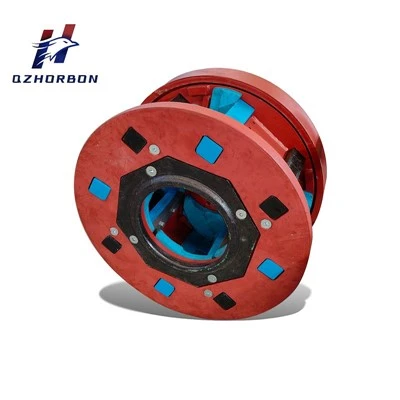
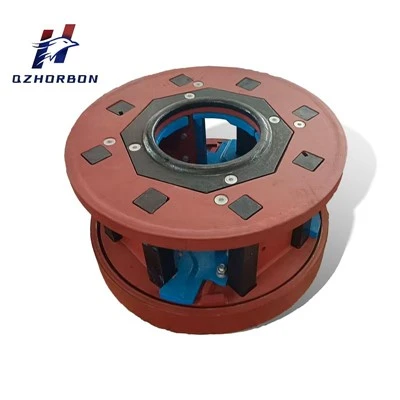
A factory like Horbon Mining Parts, for instance, works this way for buyers who no longer have OEM drawings: customers ship a worn rotor or provide the original part number, the technical team reverse-engineers and remodels it in about three days for a first-draft 2D/3D drawing, and production runs from as few as five pieces - which is a meaningfully lower barrier than the 50-piece minimums common among larger factories. You can review their full replacement crusher rotor range and specification options directly on their product page.

Part 6: Actionable Recommendations
Ask every local quote for a material certificate and country of manufacture before comparing price
Request a factory-direct quote in parallel, even if you plan to buy locally, to establish a real price baseline
For planned or recurring replacement needs, build a relationship with a manufacturer that supports reverse engineering, since OEM documentation for older machines is frequently unavailable
Start with a small trial order to validate quality and fit before committing to a full production batch
Keep material and inspection records from every rotor purchased, regardless of source, so future replacements can be benchmarked against a known standard
FAQ
Q: How often should a crusher rotor be replaced?
A: Most rotors need replacement or major rebuild once wear on critical surfaces exceeds 30–40% of original thickness, though this varies significantly with ore hardness and operating hours.
Q: Is it actually cheaper to buy a replacement crusher rotor directly from China?
A: In most cases, yes, because you remove the distributor margin layer - but the savings depend on order size, since very small or urgent orders may not justify the added logistics complexity.
Q: Can a Chinese manufacturer make a rotor without the original OEM drawing?
A: Yes, reputable manufacturers with reverse engineering capability can remodel a rotor from a worn sample or the original part number, typically producing a first drawing draft within a few days.
Q: How do I know if my "local" supplier is actually reselling a Chinese-made part?
A: Ask directly for the material certificate and country of manufacture. A supplier unwilling to disclose the origin of the casting is usually reselling under a private label.
Q: What's a reasonable minimum order quantity for a trial rotor order?
A: Many large factories require 50 pieces or more, but some manufacturers accept orders as low as five pieces, which is worth seeking out if you want to validate quality before scaling up.