

Introduction: Why Payment Terms and Contracts Matter When Buying a Replacement Crusher Rotor
For mining companies, aggregate plants, and crushing equipment operators, a damaged rotor is not just a spare parts issue - it can directly affect production schedules and operational costs.
When a crusher rotor reaches the end of its service life or suffers unexpected damage, many buyers need to purchase a replacement crusher rotor quickly. However, choosing a supplier based only on quotation price can create hidden risks, including delayed delivery, incorrect specifications, poor quality, or unclear after-sales responsibilities.
Unlike standard mechanical parts, a replacement crusher rotor is a heavy-duty industrial component that requires accurate engineering matching, specialized manufacturing, and strict quality control. A purchasing decision should therefore consider more than the product price.
For global B2B buyers, the key questions are:
- Which payment method provides better protection?
- What contract clauses should be included before production starts?
- How can buyers reduce procurement risks?
- How can a supplier's reliability be evaluated?
This guide explains the essential payment terms, contract conditions, and risk-control strategies that experienced buyers should consider when purchasing a replacement crusher rotor.

1. Understanding Payment Terms When Buying a Replacement Crusher Rotor
A replacement crusher rotor is usually a customized industrial component rather than a regular stocked spare part. Manufacturing involves technical confirmation, material preparation, machining, balancing, and inspection.
Because of the production investment involved, suppliers normally require structured payment arrangements.
For buyers, the goal should not simply be finding the lowest payment requirement. A better approach is creating a payment structure that protects both sides and connects payments with production milestones.
1.1 T/T (Telegraphic Transfer): The Most Common Payment Method
T/T is currently one of the most common payment methods used in international machinery and spare parts transactions.
A typical payment structure may include:
- 30% advance payment after contract confirmation
- 60% payment after production completion and inspection
- 10% balance payment after shipment confirmation or delivery
For example, for a replacement crusher rotor order valued at USD 50,000:
| Payment Stage | Purpose |
|---|---|
| 30% deposit | Covers raw materials and production preparation |
| 60% before shipment | Paid after inspection approval |
| 10% final payment | Completed after shipment confirmation |
This structure allows suppliers to begin manufacturing while giving buyers more control before final settlement.
Buyer Recommendation
For first-time cooperation, buyers should avoid paying 100% upfront for high-value customized crusher components unless the supplier has already been verified through previous projects or trusted references.
1.2 Letter of Credit (L/C): Suitable for Large International Orders
A Letter of Credit is a bank-supported payment method where the buyer's bank guarantees payment after the supplier provides the required documents.
It is commonly considered for:
- Large-value equipment purchases
- First-time international cooperation
- Higher-risk overseas transactions
Typical documents may include:
- Commercial invoice
- Packing list
- Bill of lading
- Inspection certificate
- Certificate of origin
The advantage of L/C is improved payment security. However, it also involves additional banking procedures and costs.
For smaller replacement crusher rotor orders, T/T with clear contract terms is often more practical.
1.3 Open Account and Net Payment Terms
Established buyers may negotiate credit terms such as:
- Net 30 days
- Net 60 days
- Net 90 days
Under these arrangements, payment is completed after receiving the goods or invoice.
However, suppliers usually offer these terms only when:
- The buyer has a proven purchasing history
- Both companies have established trust
- The transaction risk is acceptable
For new customers, milestone payments are generally more realistic.
2. Key Contract Clauses Every Crusher Rotor Buyer Should Check
Payment terms alone cannot fully protect a buyer. A professional purchase contract should clearly define product requirements, delivery responsibilities, inspection procedures, and warranty obligations.
2.1 Technical Specification Clause
The technical specification section is one of the most important parts of a replacement crusher rotor contract.
The agreement should clearly define:
- Crusher model compatibility
- Rotor dimensions
- Rotor weight
- Material grade
- Shaft specifications
- Wear-resistant components
- Dynamic balancing requirements
A common mistake is describing the order only as:
"Replacement rotor for a certain crusher model."
This information may not be sufficient because the same equipment model can have different configurations depending on production year, application, or operating conditions.
A professional procurement process should include:
- Confirming technical drawings
- Reviewing dimensional requirements
- Approving final specifications before production
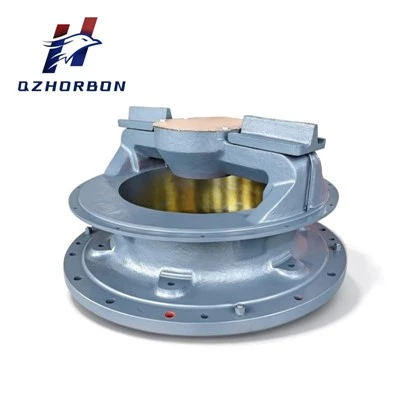
replacement crusher rotor product page
2.2 Payment Milestone Clause
The payment clause should clearly define:
- Payment percentage
- Payment schedule
- Required documents
- Currency
- Bank details
- Payment conditions
For example:
"Final payment shall be made after completion of manufacturing inspection and submission of quality documents."
This prevents situations where buyers make full payment before confirming whether production requirements have been achieved.
2.3 Inspection and Acceptance Clause
For heavy industrial components, inspection standards should be agreed before shipment.
Important inspection items include:
- Dimensional accuracy
- Material verification
- Welding quality
- Rotor balancing test
- Surface condition
The contract should specify:
- Who performs inspection
- When inspection takes place
- What standards apply
- How defective products are handled
A clear acceptance process reduces disagreements after delivery.
2.4 Delivery Terms and Incoterms
International buyers should pay close attention to delivery terms.
Common Incoterms include:
FOB (Free On Board)
The supplier delivers the product to the export port and loads it onto the vessel.
Suitable for buyers with their own logistics experience.
CIF (Cost, Insurance and Freight)
The supplier arranges transportation and insurance to the destination port.
Suitable for buyers who prefer simplified logistics management.
EXW (Ex Works)
The buyer takes responsibility for most transportation arrangements.
Suitable for experienced importers with established logistics channels.
Choosing the right Incoterm helps avoid misunderstandings about:
- Shipping responsibility
- Insurance coverage
- Transportation costs
- Risk transfer points
2.5 Warranty Clause
Warranty conditions should clearly explain:
- Warranty period
- Covered defects
- Excluded failures
- Claim procedures
- Replacement responsibilities
Buyers should distinguish between:
Manufacturing defects
Examples:
- Material quality problems
- Incorrect machining
- Structural defects
Operating-related damage
Examples:
- Incorrect installation
- Overloading
- Improper maintenance
A detailed warranty clause helps both parties understand their responsibilities.
3. How Experienced Buyers Reduce Replacement Crusher Rotor Procurement Risks
Experienced industrial buyers understand that the lowest purchase price does not always mean the lowest total cost.
A cheaper rotor may lead to:
- Shorter service life
- More frequent replacement
- Increased downtime
- Higher maintenance costs
3.1 Evaluate Total Cost Instead of Initial Price
When comparing suppliers, buyers should consider:
- Rotor service life
- Material quality
- Manufacturing accuracy
- Delivery reliability
- Technical support
A slightly higher-quality replacement crusher rotor can often provide better long-term value.
3.2 Verify Supplier Manufacturing Capability
Before placing an order, buyers should evaluate:
- Manufacturing experience
- Production equipment
- Quality control system
- Previous export experience
- Engineering support capability
A reliable supplier should be able to provide technical communication, production updates, and quality documentation.
3.3 Request Complete Documentation
Professional buyers usually request:
- Technical drawings
- Material certificates
- Inspection reports
- Production schedules
- Shipping documents
Proper documentation improves transparency and reduces purchasing uncertainty.
4. Example: A Safer Payment Structure for International Crusher Rotor Orders
Assume a buyer places an order for a customized replacement crusher rotor with a total value of USD 80,000.
A balanced payment structure could be:
Stage 1: Contract Confirmation
30% advance payment
Purpose:
- Raw material purchase
- Production preparation
- Manufacturing scheduling
Stage 2: Manufacturing Completion
60% payment after inspection
Required confirmation:
- Product dimensions approved
- Quality documents provided
- Inspection completed
Stage 3: Final Settlement
10% balance payment
Completed after:
- Shipment confirmation
- Required export documents received
This structure provides protection for both supplier and buyer.
The supplier receives production security, while the buyer maintains control over quality verification.
5. Final Checklist Before Ordering a Replacement Crusher Rotor
Before signing a purchase agreement, buyers should confirm:
✓ Supplier manufacturing experience
✓ Correct equipment compatibility
✓ Detailed technical specifications
✓ Clear payment milestones
✓ Inspection requirements
✓ Delivery schedule
✓ Warranty conditions
✓ Suitable Incoterms
A careful purchasing process can significantly reduce replacement risks and prevent unexpected production losses.
Conclusion: Smart Procurement Requires More Than Comparing Prices
Purchasing a replacement crusher rotor is an important investment that directly affects equipment reliability and production efficiency.
Successful buyers do not focus only on the lowest quotation. They evaluate:
- Payment security
- Contract completeness
- Technical accuracy
- Manufacturing capability
- Long-term supplier reliability
By establishing clear payment terms and detailed contract clauses, companies can reduce procurement risks and build stronger partnerships with experienced manufacturers.
For companies searching for customized replacement crusher rotor solutions, selecting a professional supplier with engineering capability and quality control experience is essential for long-term operational success.
Contact Horbon Machinery for replacement crusher rotor quotation

FAQ
1. What payment terms are common for replacement crusher rotor purchases?
The most common payment method is T/T with milestone payments, such as an advance deposit followed by balance payment after inspection or before shipment.
2. Should buyers pay 100% upfront for a replacement crusher rotor?
For expensive customized industrial components, full advance payment is usually not recommended for first-time cooperation. Structured payments provide better risk control.
3. What contract terms should be included when buying a crusher rotor?
Important clauses include technical specifications, payment schedules, inspection standards, delivery terms, and warranty responsibilities.
4. How can buyers verify a replacement crusher rotor supplier?
Buyers should review manufacturing experience, production capability, quality documents, previous projects, and technical communication ability.
5. What documents should buyers request before shipment?
Common documents include:
- Commercial invoice
- Packing list
- Material certificate
- Inspection report
- Balancing report
- Shipping documents