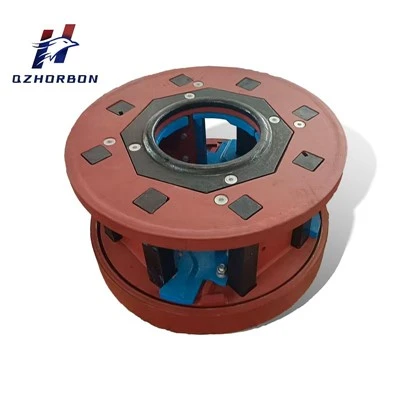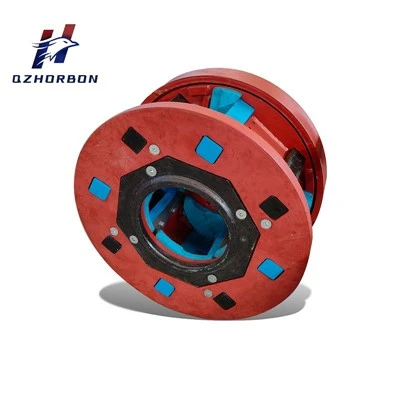


When purchasing a replacement crusher rotor in bulk, many buyers make the same mistake: they ask several suppliers for their "best price" and choose the lowest quotation.
That approach looks efficient, but it rarely produces the lowest real procurement cost.
For mining contractors, aggregate producers, crusher distributors, and equipment spare parts importers, a replacement crusher rotor is not an ordinary spare part. It is a heavy, highly engineered component that can involve casting, heat treatment, CNC machining, balancing, inspection, custom packaging, and international transportation. A small difference in unit price can easily be offset by higher freight, longer lead time, incorrect specifications, or premature replacement.
The better strategy is to negotiate the total procurement cost, not simply the unit price of the replacement crusher rotor.
This guide explains how professional B2B buyers can prepare an RFQ, create pricing competition, negotiate volume discounts, control quality-related costs, and build a stronger long-term supply arrangement.

1. Prepare a Complete RFQ Before You Negotiate
The first rule of replacement crusher rotor purchasing is simple: the better your RFQ, the better your negotiating position.
A supplier cannot accurately price a rotor if the only information provided is "Need 10 pieces, please quote your best price."
For a bulk replacement crusher rotor order, provide as much of the following information as possible:
- Crusher manufacturer and model
- Part number or OEM reference number
- Rotor type and configuration
- Required quantity
- Expected annual demand
- Delivery deadline
- Destination port or country
- Material requirements
- Drawing or technical specification
- Complete rotor assembly or selected components
- Inspection requirements
- Packaging requirements
Supplier quotation practices in the current crusher-parts market commonly rely on machine model, part number, drawings, photos, quantity, material requirements, destination, and delivery date to reduce specification uncertainty.
For buyers, this is more than an administrative step. A clear RFQ reduces the supplier's technical uncertainty. When a manufacturer knows exactly what is required, there is less room for contingency pricing.
For example, providing the original part number together with a drawing or photo of the worn component can help a manufacturer confirm whether you need a complete assembly, a rotor body, or selected wear components.
For complex requirements, you can also review 【replacement crusher rotor】 specifications before preparing your RFQ.
2. Ask for Tiered Pricing Instead of One Price
Never negotiate only one quantity.
Instead of asking:
"What is your best price for 10 replacement crusher rotors?"
ask the supplier for a quantity-based quotation such as:
5 units / 10 units / 20 units / 50 units / annual volume
This creates a transparent price curve.
The purpose is not necessarily to order 50 units. Your objective is to discover where the supplier's production economics change.
For example, a supplier may offer:
| Quantity | Quoted Unit Price |
|---|---|
| 5 rotors | $X |
| 10 rotors | $X - 5% |
| 20 rotors | $X - 9% |
| 50 rotors | $X - 14% |
The actual figures will vary according to rotor design, material, manufacturing scope, and market conditions, but the structure is extremely useful for negotiation.
Current market listings show that crusher rotor prices can vary substantially by model and configuration, while MOQ can range from one piece to much larger quantities. That makes comparing quoted prices without comparing specification and volume particularly unreliable.
For distributors, this approach can reveal whether a supplier is willing to exchange production efficiency for volume commitment.

3. Do Not Negotiate the Rotor Price in Isolation
This is one of the most effective cost-control strategies for a bulk replacement crusher rotor order.
Instead of negotiating only the rotor itself, look at your entire spare-parts basket.
A typical maintenance order may include:
- Replacement crusher rotor
- Shaft or shaft assembly
- Wear components
- Bushings
- Gears
- Seals
- Fasteners
- Other crusher spare parts
If the supplier can manufacture several of these items, you may have an opportunity to consolidate procurement into one purchase order.
The goal is not simply to obtain a lower rotor price. It is to reduce the combined purchasing, inspection, packaging, and logistics cost.
This is particularly relevant when buying from a factory that offers a wider range of crusher components. Horbon, for example, manufactures rotors and rotor assemblies as well as shafts, gears, bushings, seals, fasteners and other crusher components.
That gives buyers a stronger negotiation position:
"We are not only buying 10 replacement crusher rotors. We have a complete spare-parts requirement. What is your best package price for the entire order?"
This is usually a more powerful negotiation question than simply requesting a further discount on one component.
For a broader look at available components, an internal link can be placed on 【crusher spare parts】 and directed to the relevant category or homepage.
4. Compare Total Landed Cost, Not Factory Price
The cheapest replacement crusher rotor quotation is not necessarily the cheapest purchase.
A better comparison is:
Total Landed Cost = Product Cost + Packaging + Freight + Inspection + Import-Related Costs + Expected Replacement Risk
For heavy industrial components, freight and packaging deserve particular attention.
Ask suppliers to quote under comparable Incoterms, such as FOB or CIF, rather than comparing one supplier's FOB quotation with another supplier's CIF quotation.
Horbon's current supply information supports both FOB and CIF terms, with Shanghai and Ningbo available as shipping ports.
Packaging should also be included in the discussion. A heavy replacement crusher rotor may require reinforced export packaging, wooden cases, iron frames, rust protection, and careful securing during transportation. Horbon supports customized export packaging, including fumigated wooden cases and iron frames.
Therefore, ask every shortlisted supplier:
"Is packaging included in the quoted price?"
and:
"Please quote FOB and CIF separately."
This creates a much more reliable supplier comparison.
5. Use Quality Requirements as a Negotiation Tool
Professional buyers should never trade away critical quality controls simply to obtain a lower price.
Instead, define what must remain unchanged.
For a replacement crusher rotor, important controls may include:
- Material composition
- Hardness
- Critical dimensions
- Machining tolerances
- Non-destructive testing
- Balancing
- Inspection documentation
Horbon's documented quality-control process includes raw-material spectral analysis, HRC hardness testing, coordinate-measuring inspection, flaw detection, and third-party inspection.
The negotiation principle is:
Reduce unnecessary specifications, not necessary quality controls.
For example, a buyer may negotiate customized packaging or delivery consolidation, but should be cautious about removing dimensional inspection or balancing requirements simply to reduce the quoted price.
This distinction is important because a lower purchase price becomes meaningless if an improperly manufactured rotor causes installation problems, vibration, premature wear, or unplanned downtime.
6. Negotiate the Specification Before Negotiating the Price
Sometimes the best cost reduction does not come from asking for a discount.
It comes from removing unnecessary manufacturing complexity.
For example, a buyer may have an existing drawing that specifies a material grade or design feature that is more expensive than necessary for the actual application.
This is where an experienced manufacturer can add value.
Rather than saying:
"Make the same rotor cheaper."
ask:
"Can you review the specification and recommend a more cost-effective material or manufacturing solution without compromising the required performance?"
Horbon supports OEM and ODM production, material customization, drawing-based manufacturing, and reverse engineering from worn parts when the buyer does not have complete drawings. The company also has dedicated technical personnel for 2D/3D drawing development.
For buyers operating in highly abrasive or high-impact conditions, specification optimization can be more valuable than a simple percentage discount.
The objective is to lower manufacturing cost while keeping the replacement crusher rotor suitable for the actual operating environment.
7. Trade Volume Commitment for Better Pricing
If you are a distributor or large B2B buyer, do not think only in terms of one purchase order.
Think in terms of annual demand.
For example, instead of ordering 20 replacement crusher rotors immediately, you might negotiate:
- 20 units annual commitment
- Quarterly releases
- Agreed pricing for 12 months
- Scheduled production
- Partial stock availability
This gives the manufacturer better production visibility while giving the buyer more predictable pricing and supply.
Horbon's company information indicates a minimum order quantity as low as five units, a normal production lead time of 15–30 days, and inventory availability for commonly supplied products.
For distributors, this type of arrangement can be especially useful because it balances bulk purchasing economics with inventory risk.
Instead of asking only:
"Can you give me 10% off?"
a stronger question is:
"What price can you offer if we commit to a defined annual volume with scheduled releases?"
That changes the negotiation from a one-time discount discussion into a supply partnership discussion.

8. Use Supplier Competition Carefully
Getting three to five quotations is useful, but sending the same RFQ to twenty suppliers usually creates noise rather than leverage.
A better process is to shortlist several qualified manufacturers and make sure they are quoting the same scope.
Compare:
Model + Part Number + Material + Quantity + Inspection + Packaging + Incoterm + Lead Time
Only then should you compare price.
If Supplier A offers $10,000 and Supplier B offers $9,000, the second supplier is not automatically cheaper.
What if Supplier A includes balancing, inspection, export packaging, and a shorter lead time, while Supplier B excludes several of these items?
The correct comparison is the cost of an equivalent specification.
For buyers sourcing replacement crusher rotors from China, this distinction is particularly important because online marketplaces may display very different prices, MOQs, product configurations, and supplier conditions for apparently similar products.
9. Build a Negotiation Checklist Before Signing
Before finalizing a bulk replacement crusher rotor order, confirm the commercial and technical details in writing.
Your purchase checklist should cover:
Product: model, part number, drawing, material and configuration.
Quantity: immediate quantity, possible annual volume and release schedule.
Price: unit price, volume discount, and whether the quotation is firm for a defined period.
Quality: inspection scope, documentation, balancing requirements and acceptance criteria.
Delivery: production lead time, shipment date, port and Incoterm.
Packaging: wooden case, iron frame, rust protection and marking requirements.
Customization: OEM branding, drawings, special materials and packaging.
After-sales: procedure for handling confirmed quality problems and replacement parts.
This is particularly important for a replacement crusher rotor because the purchasing decision involves both technical compatibility and commercial risk.
10. The Best Negotiation Formula for Bulk Buyers
A practical way to think about your negotiation is:
Better Price = Higher Volume + Clearer Specification + Lower Supplier Risk + Better Order Planning
If you want a lower replacement crusher rotor price, make it easier for the supplier to produce and plan the order.
That may mean:
- Combining multiple units into one production run
- Providing drawings early
- Accepting a reasonable production schedule
- Consolidating related spare parts
- Offering an annual forecast
- Using standard packaging where possible
- Comparing equivalent Incoterms
- Agreeing on clear inspection standards
The strongest buyers do not simply ask suppliers to reduce margins. They find ways to reduce the supplier's cost and uncertainty, then negotiate to share part of that efficiency.
Final Takeaway: Negotiate the Total Cost, Not the Lowest Number
When buying a replacement crusher rotor in bulk, the winning procurement strategy is not to find the supplier with the lowest first quotation.
It is to build a comparable RFQ, create quantity-based competition, negotiate the entire spare-parts basket, compare total landed cost, protect critical quality requirements, and use annual purchasing plans to secure better commercial terms.
For buyers ordering five, ten, twenty, or more units, even a small improvement in unit economics can create substantial savings across multiple purchase cycles.
More importantly, a good supplier relationship can reduce the hidden costs that are often more expensive than the rotor itself: incorrect specifications, long lead times, emergency freight, inconsistent quality, and unplanned downtime.
Before requesting your next bulk quotation, prepare your machine model, part number, quantity, drawing or old-part information, destination, delivery schedule, and inspection requirements. Then ask suppliers to quote the same specification under the same commercial terms.
That is how you turn a simple replacement crusher rotor purchase into a professional B2B sourcing negotiation.
For buyers looking for factory-direct manufacturing, OEM/ODM support, customized materials, and bulk crusher component sourcing, you can learn more through 【Crusher Parts Manufacturer】 and review the specific 【Replacement Crusher Rotor】 product range.
FAQ
What information should I provide when requesting a replacement crusher rotor quotation?
At minimum, provide the crusher model, part number, quantity, destination, required delivery date, and available drawing or photos. For customized orders, also provide material and inspection requirements.
How can I get a lower price for bulk replacement crusher rotors?
Ask for tiered pricing based on different quantities, such as 5, 10, 20, and annual volume. You can also negotiate the complete spare-parts order rather than the rotor alone and discuss scheduled deliveries or annual purchasing commitments.
Should I choose the cheapest replacement crusher rotor supplier?
Not necessarily. Compare equivalent specifications and calculate total landed cost, including packaging, freight, inspection, lead time, and quality risk. A lower unit price can become more expensive if the product causes additional downtime or replacement costs.
Is buying a complete rotor assembly better than buying individual parts?
It depends on the condition of the existing rotor. If the rotor body or critical interfaces are damaged, a complete replacement may be more appropriate. If the main structure remains serviceable, replacing selected wear or damaged components may be more economical.
Can a manufacturer customize a replacement crusher rotor?
Yes. Depending on the supplier's capabilities, customization may include material composition, dimensions, OEM/ODM production, drawings, branding, and export packaging. For buyers without complete drawings, some manufacturers can also reverse-engineer a worn component.