

If you've ever received three quotes for the same replacement crusher rotor and watched the numbers swing from $800 to $3,000, you already know the core problem: unit price alone tells you almost nothing about what a rotor will actually cost your operation. A cheap casting that cracks after 300 hours isn't cheap. An expensive one bought without a clear spec can still be the wrong part. For procurement managers buying crusher rotors - whether for VSI, impact, or hammer crushers - the real skill isn't finding the lowest quote. It's building a process that controls cost at every stage: inquiry, sampling, production, quality control, and logistics.
This guide walks through that process end to end, with the specific cost levers B2B buyers can actually pull.
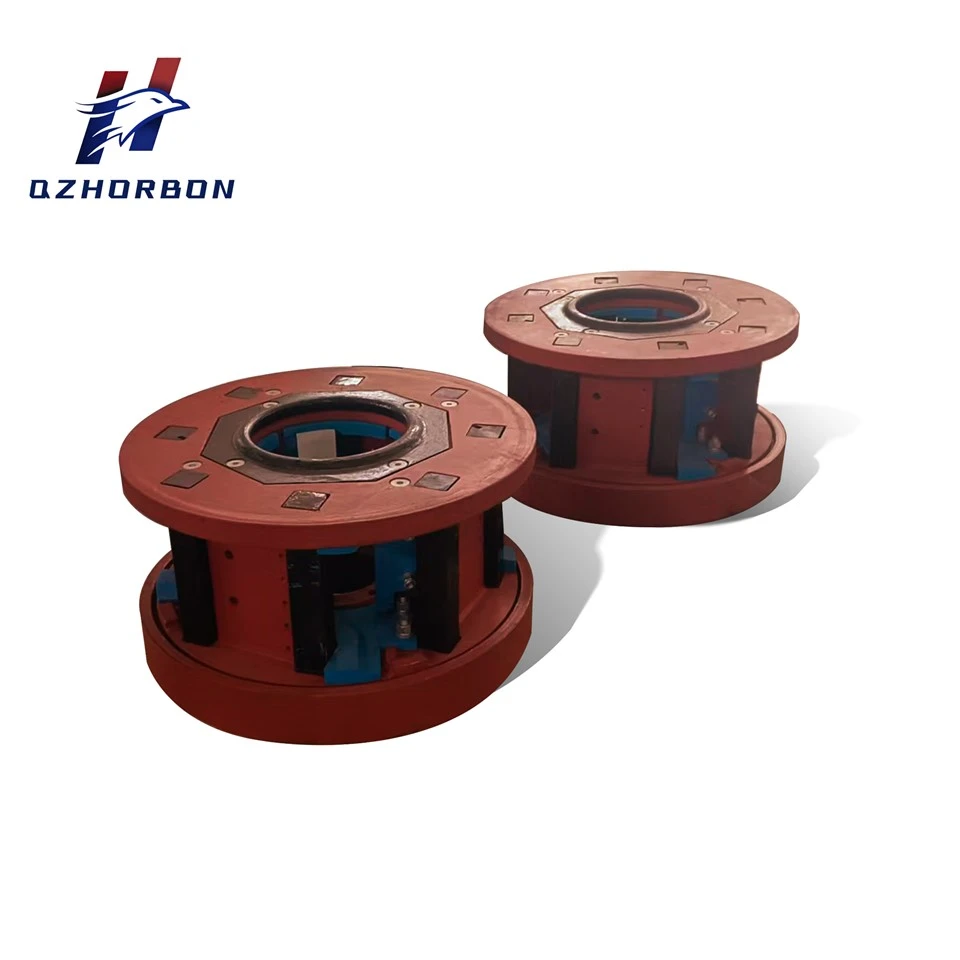
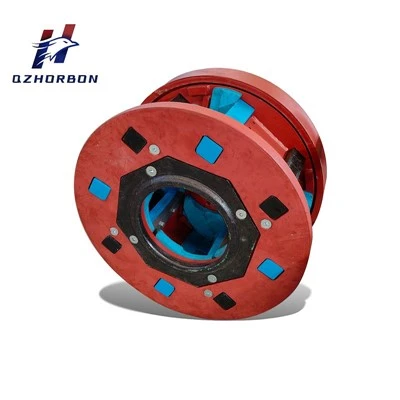
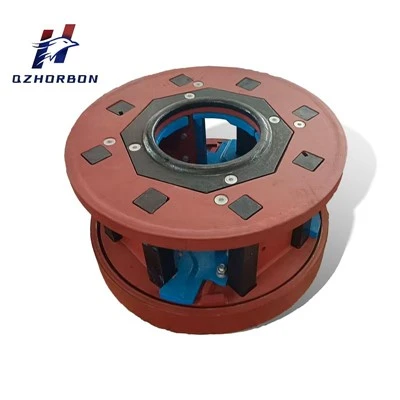
Horbon Replacement Crusher Rotor
Why Rotor Costs Vary So Much Between Suppliers
A rotor priced at $180 and one priced at $620 for the same nominal spec usually differ in three hidden variables: alloy composition, casting/machining process, and expected wear life. None of these show up on a basic quote sheet unless you ask.
The components that typically make up a replacement rotor assembly - rotor body, tips, bushings, main shaft interface, fasteners - each have different wear characteristics depending on your feed material. In high-silica or granite applications, standard chrome-alloy tips can wear out in 60–120 hours, while in softer limestone or sand applications the same part might last 200–400 hours. If your supplier can't tell you which material grade they're quoting, you're comparing prices, not products.
Practical takeaway: Always request the alloy grade (e.g., high-manganese steel, chromium-molybdenum alloy, or bi-metal wear-resistant construction) and ask whether tips or wear inserts are heat-treated and quenched. A 20% higher unit price on a properly heat-treated part is frequently a lower cost per ton processed.
Cost Driver #1: OEM vs. Aftermarket vs. Custom-Built
Most buyers default to OEM parts assuming it's the "safe" choice, but OEM crusher rotor pricing typically runs 30–70% higher than equivalent aftermarket parts of comparable spec. That premium isn't automatically wasted money - it depends on your situation:
If you have the original Part Number or 3D drawings, a qualified aftermarket manufacturer can produce a dimensionally identical replacement at a fraction of OEM cost, with no compatibility risk.
If your original rotor is damaged and you have no drawings at all, this is where reverse engineering becomes relevant. A factory with in-house measurement and modeling capability can inspect the worn part, rebuild the 3D model, and produce a matching replacement - typically within about 3 days for a first-draft 2D/3D drawing once your requirements are received. This path avoids paying OEM premiums simply because you lost the paperwork.
If your operating conditions are unusually harsh (extreme abrasion, high impact loads), a custom material or design adjustment can extend service life beyond what a stock OEM or aftermarket part offers - worth discussing with your supplier's technical team before ordering.
Cost Driver #2: MOQ Strategy and Trial Orders
One of the most overlooked budget-control tools is minimum order quantity. Many buyers assume large factories only accept bulk orders, which pushes them toward either overordering (tying up capital in inventory) or working with unreliable small-batch traders.
In practice, manufacturers supporting MOQs as low as 5 pieces let you test fit, material performance, and lead time before committing to a full production run. For a new supplier relationship or a new crusher brand/model, this is the single cheapest form of risk insurance available - a small trial order costs far less than a full container of rotors that don't fit or wear out prematurely.
Budget tip: Structure your first order as a trial batch (5–20 units depending on your consumption rate), track actual wear hours against your feed material, and only scale to full production quantities once you have real performance data. This is far more reliable than trusting a supplier's stated wear-life claims.
Cost Driver #3: Quality Control Points That Prevent Hidden Costs
The line item most buyers skip when comparing quotes is quality control - and it's often where hidden costs hide. A rotor that fails inspection after it's already installed doesn't just cost the replacement part; it costs unplanned downtime, which for a mid-size crushing operation can run into thousands of dollars per shift.
Look for suppliers who can document:
Spectrographic analysis of raw material - confirms actual alloy composition matches spec, not just the label
Hardness testing (HRC) - verifies heat treatment actually achieved target hardness
CMM (coordinate measuring machine) dimensional inspection - confirms tolerances for fitment, especially critical on shaft interfaces and mounting points
Flaw/crack detection - catches internal casting defects invisible to the eye
Third-party inspection availability - for buyers who want an independent check before shipment
None of these tests should be treated as optional extras on a quote - they're what separates a genuinely inspected part from one where you're trusting the seller's word.
For teams responsible for the practical side of things, it also pays to line up your maintenance documentation early. Once the new rotor arrives, having clear reference material on hand - such as our installation step-by-step guide with illustrations - helps installation crews avoid torque and alignment mistakes that shorten rotor life regardless of how well the part itself was made.
Cost Driver #4: Logistics and Packaging - The Cost Buyers Forget
Heavy machinery components like rotor assemblies, shafts, and bushings are dense, often precision-machined, and vulnerable to corrosion during ocean freight. Buyers frequently focus entirely on unit price and freight quotes while overlooking packaging quality - until a shipment arrives with surface rust on a machined bore, forcing costly rework or outright rejection.
Ask suppliers specifically about:
- Fumigated wooden crates or steel frame packaging for export shipments
- Anti-rust treatment applied before packing, not just at the factory floor stage
- Standard trade terms (FOB/CIF) and which port the goods ship from - port choice affects both freight cost and transit time to your region
Buyers sourcing from China should note that common export ports (e.g., Shanghai, Ningbo) offer different sailing frequency and freight rates depending on your destination market - Southeast Asia, the Middle East, Africa, Europe, or the Americas - so it's worth comparing quotes with port and Incoterm clearly specified rather than assuming FOB pricing is comparable across suppliers.
Cost Driver #5: Lead Time and Stock Availability
Standard production lead time for a custom or semi-custom rotor typically runs 15–30 days. If your operation can't tolerate that window during unplanned failures, ask suppliers directly whether they carry standing inventory of common configurations. A supplier with regular stock on hand can often ship within days rather than weeks - a factor that should be weighed alongside price when your downtime cost exceeds the price difference between suppliers.
Building Your Budget: A Practical Framework
Rather than asking "what does a rotor cost," structure your budget around four questions:
- What's my real cost per ton processed? - Track wear hours and tonnage from the day a rotor is installed. This is the only number that lets you compare a $400 part against an $800 part honestly.
- What's my risk tolerance for a new supplier? - Use low-MOQ trial orders to validate before scaling spend.
- What's my downtime cost if a part fails or arrives late? - This determines whether paying more for stocked inventory or faster lead time is worth it.
- What's my total landed cost, not just unit price? - Factor in packaging quality, freight terms, and rework risk from inadequate anti-corrosion protection.
Once a new rotor is in service, cost control doesn't stop at installation. Following consistent daily operating procedures and precautions - covering start-up checks, load monitoring, and wear inspection intervals - is what actually determines whether you get 400 hours or 150 hours out of the same part, which is ultimately the biggest lever on your per-ton cost.
If you're evaluating suppliers for a replacement rotor and want a starting reference point on specification and options, our replacement crusher rotor product page outlines material options, compatible brands, and MOQ terms for exactly this kind of trial-order approach.
FAQ
Q: How much does a replacement crusher rotor cost?
It depends heavily on crusher type, size, and material grade, but expect OEM pricing to run 30–70% above comparable aftermarket parts of equivalent spec. Always compare cost per ton processed, not just unit price.
Q: Is aftermarket as reliable as OEM?
When produced from accurate drawings or precise reverse-engineering measurement, and verified through spectrographic, hardness, and dimensional testing, aftermarket rotors can match OEM performance at meaningfully lower cost.
Q: What if I don't have the original drawings for my rotor?
A manufacturer with reverse engineering capability can measure your worn part and rebuild a matching 3D model, typically producing a first draft within a few days - no need to pay OEM premiums just because paperwork was lost.
Q: How do I reduce the risk of ordering from a new supplier?
Start with a small trial order - MOQs as low as 5 pieces are available from some manufacturers - and validate fit and wear performance before committing to bulk quantities.
Q: Does packaging really affect total cost?
Yes. Inadequate anti-rust treatment or packaging on ocean freight shipments can lead to surface corrosion on precision-machined parts, forcing rework or rejection - a cost that never shows up on the original quote.