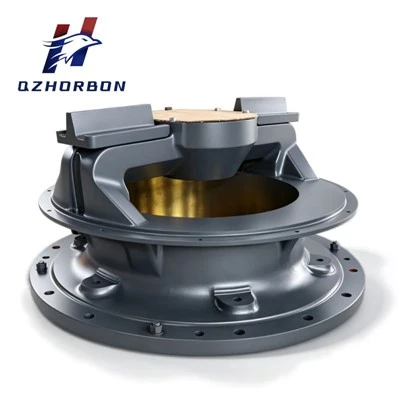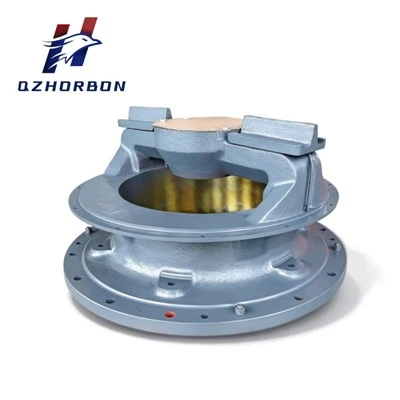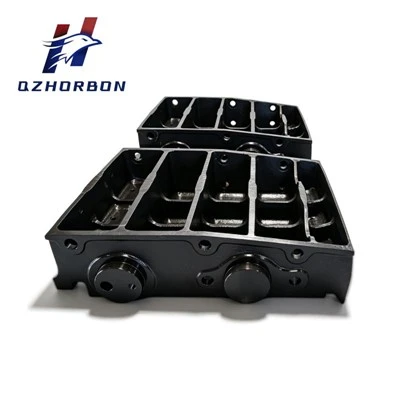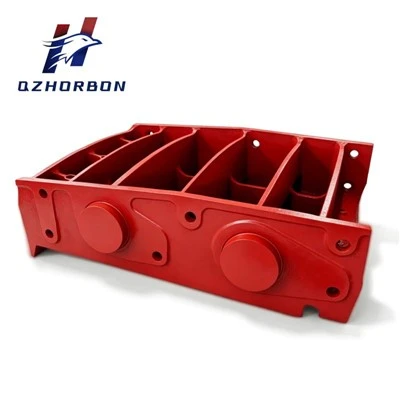

The liners of a cone crusher-specifically the bowl liner and the mantle-serve the functions of lifting the grinding media, crushing the ore, and protecting the crusher body. When selecting cone crusher liners, users must consider three key factors: throughput, power consumption, and wear resistance. Generally, the selection process is guided by principles such as the maximum feed size, variations in particle size, the distribution of feed particle sizes, material hardness, and material abrasiveness. Longer liners typically result in higher power consumption; therefore, shorter liners are selected for hard materials, while longer liners are chosen for soft materials. Regarding material distribution, shorter liners are preferred for fine materials, whereas longer liners are selected for coarse materials.
Function
The primary function of cone crusher liners is to protect the crusher body, shielding it from the direct impact and abrasion caused by the grinding media and the material being processed. Furthermore, by utilizing their varying working surfaces, these liners can adjust the operational dynamics of the grinding media, thereby enhancing the crushing action on the material, improving grinding efficiency, increasing throughput, and minimizing wear on both the media and the liners themselves.
Replacement
When the wear on a cone crusher liner has not yet reached the critical threshold requiring full replacement, the liner can often be inverted (flipped) for continued use, or the upper and lower sections can be swapped. However, liners must be replaced when their thickness has worn down by 65% to 80%, or when they exhibit localized wear, deformation (denting), or cracking. After installing new liners, it is essential to verify that they are correctly centered. If the centering is incorrect, operation will result in collisions, uneven product particle size, and potential malfunctions such as overheating of internal friction components.
Material
Historically, cone crusher liners were manufactured using high-manganese steel, modified high-manganese steel, carbon alloy steel, or chromium cast iron. Today, to extend liner service life, Dapeng Heavy Industry typically utilizes manganese steel containing over 12% manganese. Under conditions of intense impact loading, this material undergoes work hardening on its surface, developing both high hardness and the necessary toughness to resist wear.
Selection
1. Liner Contribution to Throughput: For a crushing facility, the primary metric of interest is the crusher's production output. This output is directly linked to the performance of the cone crusher liners. The higher the throughput facilitated by the liners, the lower the production costs for the crushing facility, thereby resulting in improved profit margins.
2. Liner Power Consumption: The longer the liner, the higher the power consumption. Short liners are selected for hard materials, while long liners are chosen for soft materials; similarly, short liners are preferred for fine materials, and long liners for coarse materials. Users should select the appropriate liners based on their specific requirements.
3. Liner Wear Resistance: The wear resistance of a liner varies depending on the materials used in its manufacture. Since liners are frequently subjected to intense impact, they are prone to severe abrasion; this can lead to non-uniform product particle sizes and a decline in productivity, thereby causing unnecessary economic losses for the user. Therefore, users should prioritize wear resistance when selecting liners.