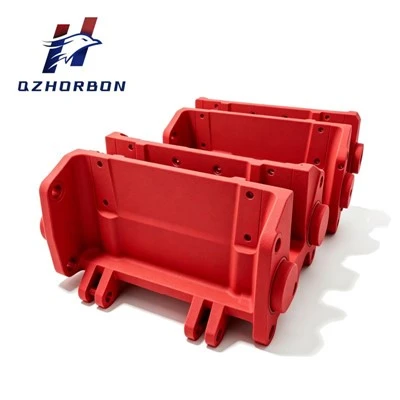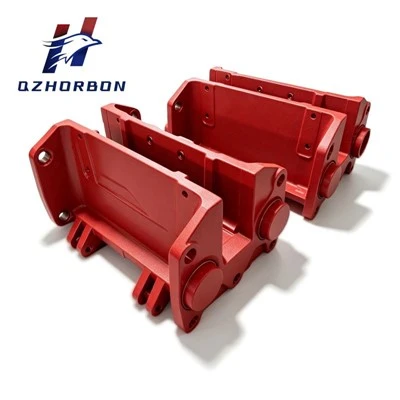

The jaw crusher tooth plate-commonly referred to as a "jaw plate" or "jaw liner"-is a critical wear-resistant component of a jaw crusher. It consists of two types: the fixed jaw plate and the movable jaw plate; material is crushed through the mutual compression exerted by these two plates.
Jaw plates are typically manufactured from materials such as high-manganese steel. They may feature various designs-including segmented or curved profiles-and are secured to the machine frame and the movable jaw using bolts or wedges. Once worn, their service life can often be extended by flipping, swapping, or replacing the plates.
Jaw plates are the most frequently utilized spare parts in jaw crushers; common alternative names include "tooth plates" and "jaw liners."
The jaw plates within a jaw crusher are categorized into fixed and movable types, serving as the primary wear-resistant elements of the machine.
Jaw plates are designed for use in jaw crushers and similar crushing equipment.
Depending on the specific model of the jaw crusher, jaw plates are available in a wide variety of sizes and specifications.
During the operation of a jaw crusher, the movable jaw-fitted with the movable jaw plate-executes a reciprocating motion; this action creates a compressive angle against the fixed jaw plate, thereby crushing the stone material. Consequently, the jaw plate is one of the components within a jaw crusher most susceptible to damage (classified as a "wear part").
The material composition of a jaw crusher's tooth plate directly impacts its wear resistance, service life, and crushing efficiency. Traditional materials primarily consist of high-manganese steels-such as ZGMn13, Mn13Cr2, and Mn18Cr2-which possess excellent resistance to impact loads and superior work-hardening capabilities.
However, under certain operating conditions, insufficient work-hardening may occur, potentially leading to accelerated wear of the plates. To enhance performance, various improved materials have been developed: Modified high-manganese steel-achieving modification or dispersion strengthening through the addition of elements such as Cr, Mo, W, Ti, V, and Nb to boost initial hardness and yield strength; Medium-manganese steel-characterized by lower austenite stability, which readily induces martensitic phase transformation upon impact, thereby improving wear resistance by over 20% compared to traditional high-manganese steel; Medium-carbon low-alloy cast steel-combining high hardness with adequate toughness to resist cutting abrasion and fatigue spalling caused by repetitive material compression, offering a service life more than three times longer than that of high-manganese steel; and Bimetallic composite materials-such as composites of high-chromium cast iron and high-manganese or low-alloy steel-which leverage the superior wear resistance of the surface layer and the high toughness of the base layer to achieve a relative wear resistance improvement of over 300%.
Material selection requires a comprehensive consideration of factors such as impact load, material hardness, and wear mechanisms. For large-scale crushers, which are subject to heavy impact loads, modified or dispersion-strengthened high-manganese steel is the preferred choice; for medium- and small-scale crushers, where impact loads are relatively lower, selecting medium-carbon low-alloy steel or high-chromium cast iron/low-alloy steel composites offers greater technical and economic efficiency. When processing hard materials, priority should be given to materials with high hardness. If cutting abrasion is the predominant wear mechanism, material selection should prioritize hardness; conversely, if plastic deformation or fatigue wear is the primary mechanism, the focus should be placed on the material's plasticity and toughness.