
Core Material Composition of Blow Bars
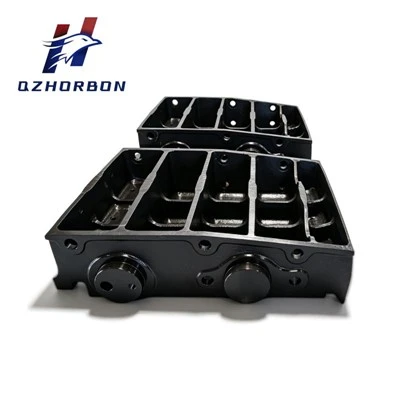
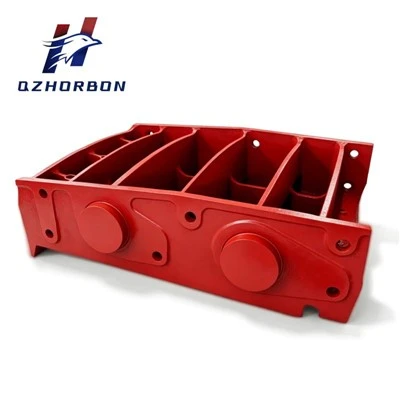
The blow bar in an impact crusher acts as the machine's "iron fist," and its operational effectiveness depends directly on its material formulation. Mainstream materials typically utilize high manganese steel as a base, alloyed with elements such as chromium and carbon to enhance hardness. For specific, demanding operating conditions, additional alloying elements-such as nickel and vanadium-may be introduced; much like fitting a boxer with different types of gloves, some formulations prioritize wear resistance, while others aim for superior impact resistance.
II. Key Trace Elements
Carbon (C): Present at approximately 0.9%–1.5%, it acts like the steel reinforcement within concrete, significantly enhancing hardness.
Manganese (Mn): Constituting 11%–14% of the composition, it serves as the "airbag"-the primary shock absorber-providing impact resistance.
Chromium (Cr): Added in quantities of 2%–3%, it forms a protective surface layer that enhances wear resistance.
Silicon (Si): Present at 0.3%–0.8%, it regulates material fluidity and improves casting properties during the manufacturing process.
The Special Combination of Tungsten, Molybdenum, and Copper
Certain "high-performance" versions of blow bars do indeed incorporate a trio of special elements: tungsten (W), molybdenum (Mo), and copper (Cu).
The tungsten-molybdenum combination enhances high-temperature stability, making the blow bars suitable for crushing extremely hard materials such as quartzite.
Copper content is typically kept below 1%; its primary function is to improve the overall toughness of the material.
Alloys of this type are relatively expensive and are therefore predominantly utilized in large-scale crushing equipment designed for continuous, long-duration operations.