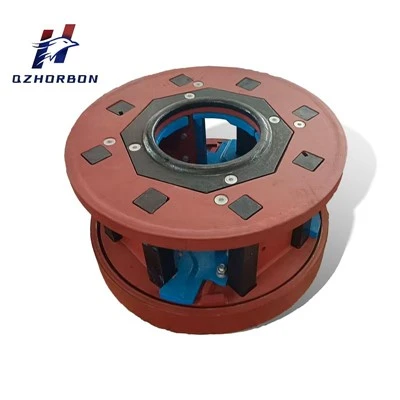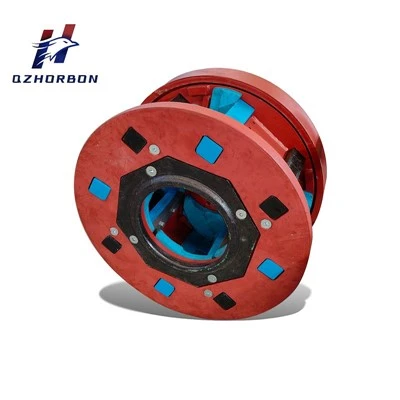


Two crusher rotors can look almost identical on a quotation sheet and still perform very differently in the field.
One supplier may quote a lower price and promise "high wear resistance," while another provides a higher price with details about material composition, hardness, dimensional tolerance, balancing, and inspection. Which crusher rotor is actually the better buy?
For mine operators, crusher rebuilders, and spare-parts distributors, the answer should not start with the brand name or unit price. A more reliable approach is to compare the performance parameters you can verify and then evaluate the manufacturing evidence behind them.
This guide explains the core crusher rotor parameters that should be compared before purchasing, how to identify weak specifications, and how to choose a supplier based on long-term operating cost rather than purchase price alone.
1. Do Not Compare Crusher Rotor Prices Before Comparing Specifications
The first mistake in crusher rotor procurement is comparing two quotations as if the products were identical.
A typical quotation may show:
- Crusher model
- Rotor assembly
- Material
- Weight
- Price
- Delivery time
But these items do not tell you enough about actual performance.
For example, two replacement crusher rotors may both be described as "alloy steel," yet their chemical composition, heat treatment, hardness distribution, machining accuracy, and balancing quality can be different. Those differences can affect wear behavior, vibration, installation fit, and maintenance frequency.
This is why a useful procurement comparison should move from "What does it cost?" to "What exactly am I receiving, and how is it verified?"
For B2B buyers, that distinction is critical because the cost of an inferior rotor is not limited to the purchase price. Premature wear, unexpected vibration, installation problems, damaged mating components, and unplanned downtime can quickly outweigh the initial saving.

2. Crusher Rotor Material: Look Beyond the Material Name
Material is one of the most visible crusher rotor specifications, but it is also one of the easiest to oversimplify.
Depending on the application, crusher rotors and related wear components may use materials such as manganese steel, alloy steel, or other wear-resistant grades. The right selection depends on the operating environment, including feed characteristics, impact load, abrasion, crusher type, and expected duty cycle.
A supplier saying "high-strength alloy steel" has provided a useful starting point-but not enough information to make a technical purchasing decision.
Ask for the material grade and, where relevant, the chemical composition or material test result. This is particularly important for large-volume orders because consistent material chemistry helps reduce batch-to-batch variation.
The practical rule is simple:
Do not ask only which material is used. Ask why that material is suitable for your operating condition and how the supplier verifies it.
For buyers evaluating different rotor materials, see 【crusher rotor materials comparison】 for a more detailed discussion of alloy selection and wear considerations.
3. Hardness Matters, But Harder Is Not Automatically Better
Hardness is another parameter that often appears in crusher rotor specifications. It indicates a material's resistance to indentation and provides a useful way to evaluate whether heat treatment and material properties are within the expected range.
However, a common procurement mistake is assuming that a higher hardness number automatically means a longer service life.
In real crushing applications, the balance between hardness and toughness matters. A component exposed to severe impact loads needs to withstand repeated loading without becoming excessively brittle. The ideal property depends on the rotor design, material, application, and operating condition.
A better comparison therefore looks at:
Material → Heat Treatment → Hardness → Toughness/Service Requirement
Rather than:
Higher Hardness = Better Rotor
For a serious supplier evaluation, ask whether hardness is tested on the finished product and whether a test report can be provided. Hardness testing is one of the practical quality-control methods available for crusher parts.
4. Rotor Geometry and Fit: The Specification That Can Stop an Installation
A crusher rotor can have excellent material properties and still fail as a replacement part if the geometry or interface dimensions are wrong.
Important dimensional factors may include rotor diameter, width, shaft dimensions, bore dimensions, keyways, mounting interfaces, wear-component locations, and other model-specific tolerances.
This is why "fits your crusher model" is not sufficient as a technical statement.
A better question is:
How does the supplier verify the critical dimensions before shipment?
For replacement components, dimensional inspection is particularly valuable when the part is being manufactured from drawings, part numbers, samples, or reverse-engineered measurements.
Coordinate Measuring Machine (CMM) inspection can provide a more objective way of confirming critical dimensions than visual inspection alone.
This is also an important cost-control point. A rotor that cannot be installed correctly creates more than a return-and-replacement problem. It can consume installation labor, extend downtime, and delay production.
When ordering a replacement crusher rotor, provide the crusher model, OEM part number, current drawing, and critical dimensions whenever available. When drawings are unavailable, ask whether the supplier can inspect and model the original component.
5. Rotor Balance: A Parameter Buyers Should Not Ignore
Balance is one of the most underestimated crusher rotor parameters.
Because a rotor rotates at high speed, uneven mass distribution can create centrifugal forces. In practical terms, poor balance can contribute to excessive vibration, increased mechanical stress, and reduced reliability of associated components.
A supplier may describe a rotor as "precision balanced," but that wording is not as useful as an actual balancing specification or inspection record.
For procurement purposes, ask:
- Is the rotor dynamically balanced?
- What balancing requirement or grade is used?
- Is a final balancing report available?
- Is balancing performed after the relevant machining process?
The important principle is that balance should be treated as a measurable quality parameter, not just a marketing phrase. Crusher-parts manufacturers already use balancing grades and dynamic-balancing documentation as part of rotor specifications, which makes this a practical comparison point for buyers.
6. Compare the Wear Package, Not Just the Rotor Body
Another major procurement blind spot is treating the crusher rotor as a single component.
In actual operation, performance is often influenced by the complete wear configuration around the rotor. Depending on crusher type, this may include blow bars, wear plates, tips, tip holders, wear rings, distributor components, and other replaceable parts.
That means two suppliers can offer similarly priced rotor assemblies but deliver different maintenance economics.
A better question is:
How is the rotor designed to work with its wear components over the expected operating cycle?
For example, a rotor that requires frequent replacement of critical wear components may produce a higher cost per operating hour even when the initial assembly price is attractive.
This is especially relevant for distributors and fleet operators. Instead of comparing only rotor price, consider comparing:
Purchase Cost + Wear-Part Cost + Maintenance Labor + Downtime Risk
That gives you a more realistic picture of total cost.
For buyers managing regular replacement cycles, 【crusher rotor maintenance and replacement guide】 can be used alongside the initial supplier comparison.
7. Inspection Evidence Is More Valuable Than "High Quality"
Many crusher rotor suppliers use phrases such as:
"High quality"
"Long service life"
"OEM standard"
"Premium alloy"
These statements may sound reassuring, but they are difficult to compare unless they are supported by evidence.
A stronger supplier should be able to explain how critical properties are checked.
For example, a manufacturing and quality-control process may include:
Raw Material → Chemical/Optical Analysis → Casting or Forging → Heat Treatment → Machining → Dimensional Inspection → Hardness Testing → NDE → Final Inspection
For crusher parts, inspection methods can include material spectroscopy, hardness testing, CMM dimensional inspection, and non-destructive testing, depending on the component and customer requirements.
This creates a useful procurement rule:
Do not compare what suppliers claim. Compare what suppliers can document.
That single change can make supplier evaluation much more objective.
8. OEM vs Aftermarket vs Generic vs Rebuilt: What Should You Actually Buy?
The better question is not "Is OEM always better than aftermarket?"
Instead, ask whether the supplier can meet the technical requirements of your machine and provide adequate evidence of manufacturing quality.
An OEM component may be the most straightforward option when exact factory specifications, documentation, or original configuration are the priority.
A specialist aftermarket manufacturer can be attractive when the buyer needs competitive pricing, flexible customization, alternative materials, shorter sourcing channels, or support for older equipment.
A generic low-cost component may work for some applications, but buyers should pay closer attention to material traceability, dimensional control, balancing, and inspection documentation.
A rebuilt rotor can make sense when refurbishment is technically feasible and the remaining structural condition is acceptable. However, the inspection process becomes especially important because the component has already seen service.
For high-volume B2B procurement, therefore, the best question is not:
"Which category is cheapest?"
It is:
"Which supplier gives us the most predictable performance and supply cost for our operating condition?"
9. A Practical Crusher Rotor Supplier Comparison Checklist
Before placing a purchase order, ask each supplier to provide comparable information.
| Parameter | What to Compare | What to Request |
|---|---|---|
| Material | Grade and suitability | Material specification/test data |
| Hardness | Finished-part hardness | Hardness test result |
| Dimensions | Critical interfaces and tolerances | Drawing or inspection report |
| Balance | Dynamic balancing quality | Balance specification/report |
| Wear Design | Wear component configuration | Component list and service recommendations |
| NDE | Structural integrity | Relevant NDE result |
| Customization | Ability to match actual equipment | OEM/ODM confirmation |
| Lead Time | Production and delivery risk | Confirmed delivery schedule |
| MOQ | Purchasing flexibility | Minimum order quantity |
| Supply Consistency | Repeat-order capability | Long-term supply plan |
For international buyers, this checklist can be especially useful when comparing three or more suppliers. Instead of allowing each company to define "quality" differently, require all suppliers to answer the same technical questions.
10. Why Manufacturer Capability Matters for Custom Crusher Rotor Orders
Not every replacement crusher rotor can be selected from a standard catalog.
Older machines may have incomplete documentation. Some distributors may have only a part number. In other cases, the buyer may have a damaged component but no usable engineering drawing.
This is where manufacturer capability becomes part of the product decision.
A supplier able to work from OEM part numbers, drawings, or physical samples can reduce sourcing barriers. Reverse engineering can also be useful when a customer sends a damaged part for measurement and remodeling. A capable engineering team can then develop new 2D or 3D drawings based on the required configuration.
For specialized B2B orders, customization may also include material composition, packaging, logo marking, and other production requirements.
This is particularly valuable for distributors that need repeatable replacement supply across different crusher models.

Conclusion: Buy the Evidence, Not Just the Crusher Rotor
When comparing crusher rotors, the lowest quotation is rarely enough information to make a sound purchasing decision.
The better approach is to compare the parameters that directly influence reliability: material, hardness, geometry, fit, balance, wear configuration, inspection, and supply capability.
Then ask the supplier a second question:
"What evidence can you provide to prove these specifications?"
That is the difference between buying a component and managing procurement risk.
For a one-time emergency replacement, price and availability may dominate the decision. For recurring B2B orders, however, the real objective should be predictable performance, repeatable quality, and controlled total operating cost.
Before requesting a crusher rotor quotation, prepare your machine model, part number, drawings or sample information, operating conditions, required quantity, and delivery target. Then compare suppliers using the same technical checklist.
The best crusher rotor is not necessarily the cheapest or the most expensive. It is the one whose critical parameters match your application-and whose quality can be verified before it reaches your crusher.
FAQ
What are the most important crusher rotor parameters to compare?
The key parameters include material, hardness, critical dimensions, rotor geometry, dynamic balance, wear-component configuration, inspection results, and delivery capability. For B2B buyers, these should be evaluated together rather than in isolation.
Is a harder crusher rotor always better?
No. Higher hardness does not automatically mean longer service life. The appropriate combination of hardness and toughness depends on impact load, abrasion, material characteristics, rotor design, and operating conditions.
How can I verify the quality of a replacement crusher rotor?
Ask for measurable evidence such as material test data, hardness results, dimensional inspection records, relevant NDE reports, and balancing documentation. A supplier should be able to explain how critical specifications are controlled.
What information should I send when ordering a crusher rotor?
Provide the crusher model, OEM part number, drawings, dimensions, photos, and operating conditions whenever possible. If drawings are unavailable, ask whether the supplier can work from a physical sample through measurement and reverse engineering.
Should I choose an OEM or aftermarket crusher rotor?
Neither option is automatically best for every application. Compare the supplier's material, fit, balancing, inspection, customization capability, delivery, and total cost against your operating requirements. For repeat B2B purchasing, consistency and verifiable quality can be more important than the label alone.