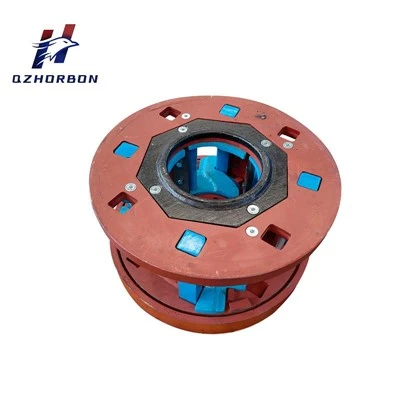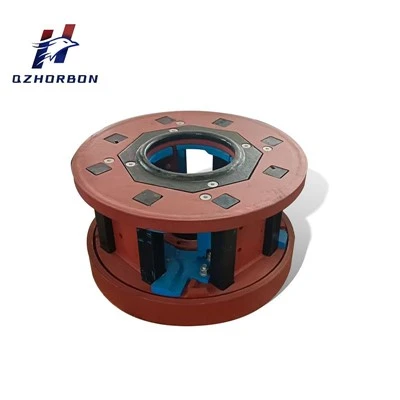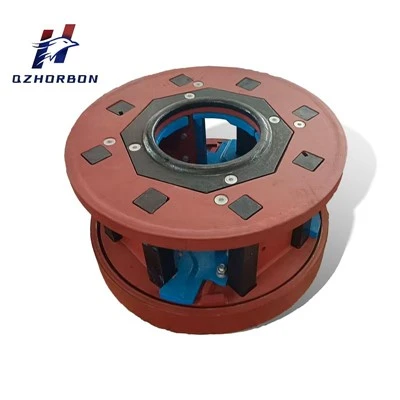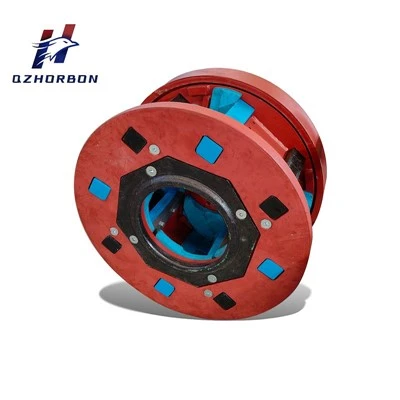


Quzhou Horbon Mining Parts Co., Ltd. is one of the leading manufacturers and suppliers of brown crusher rotor in China. With abundant experience, we are committed to providing high quality customized service and OEM service to global clients. Welcome to buy advanced brown crusher rotor made in China here from our factory. Contact us for quotation.
Brown Crusher Rotor - Factory-Direct Rotor Assemblies & Components for Impact and VSI Crushing Applications
The Component That Determines Your Crusher's True Capacity

Rotor quality is not visible from the outside of a shipping crate. It lives in the alloy composition of a plate hammer, the bore tolerance of a bearing housing, the grain structure of a forged shaft, the port-to-port mass consistency of a VSI wear plate set. These are manufacturing decisions made weeks before the part arrives on site - and they determine whether your next planned maintenance interval runs to schedule or gets cut short by a component that was never built to last.
Quzhou Horbon Mining Parts Co., Ltd. has been making those manufacturing decisions as a dedicated crusher parts factory since its establishment in Quzhou, Zhejiang. Our 13,000 m² production facility manufactures brown crusher rotor assemblies and sub-components for both the PFC1415P horizontal impact crusher and the MP VSI4000 vertical shaft impact crusher - alongside the full range of crusher wear and structural parts that complete a one-stop procurement program for plant maintenance teams worldwide.
Nameplate crusher capacity is a theoretical figure. Actual throughput - the tonnes your plant produces per operating hour, per maintenance dollar spent, per kilowatt consumed - is determined by the condition and quality of the components inside the machine. At the center of that equation sits the brown crusher rotor.

Rotor Type and Machine Compatibility
PFC1415P - Horizontal Shaft Impact Crusher Rotor
Crusher drawing


Crushing mechanism: High-velocity plate hammer strike against feed material
| Specification | Value |
| Assembly Part Number | 2105070001 |
| Compatible Machine | PFC1415P Horizontal Impact Crusher |
| Rotor Diameter | Ø1368 mm |
| Assembly Length | 2807 mm |
| Total Assembly Weight | 8,150 kg |
| Rotor Body Weight | 4,043 kg |
| Hammer Configuration | 4-Row Plate Hammer |
| Single Plate Hammer Weight | 447.75 kg |
| Main Shaft Weight | 670.25 kg |
| Drive Pulley Weight | 521.63 kg |
| Bearing Specification | Self-Aligning Spherical Roller |
| Total Component Count | 44 Parts |
| MOQ Per Part | 5 pcs |
| Lead Time | 15–30 Days |
| Shipping | FOB / CIF - Shanghai / Ningbo |
MP VSI4000 - Vertical Shaft Impact Crusher Rotor
Create a comprehensive solution for efficient human theft manag
Crusher drawing


Crushing mechanism: High-speed centrifugal acceleration through 4-port disc geometry
| Specification | Value |
| Assembly Part Number | 2103030016 |
| Compatible Machine | MP VSI4000 Vertical Shaft Impact Crusher |
| Rotor Configuration | 4-Port / 4-Channel |
| Rotor Diameter | Ø840 mm |
| Rotor Height | 448 mm |
| Shaft Bore (Inner / Outer) | Ø390 mm / Ø420 mm |
| Balance Provision | Static Balance Adjustment Bolt Holes |
| Total Component Count | 25 Parts |
| MOQ Per Part | 5 pcs |
| Lead Time | 15–30 Days |
| Shipping | FOB / CIF - Shanghai / Ningbo |
How Each Rotor System Works - And Why It Matters for Parts Procurement
Understanding the mechanical logic of each rotor type helps maintenance engineers and procurement managers make better sourcing decisions - not just for the rotor assembly itself, but for the wear part replenishment strategy that follows.
In the PFC1415P horizontal impact crusher, energy is concentrated. Four plate hammers - each weighing 447.75 kg - rotate at operating speed and strike incoming feed material with controlled kinetic force. The rotor body is the structural platform for this energy delivery system: it must maintain dimensional stability under millions of repeated impact cycles without accumulating fatigue damage. The main shaft transmits torque from the drive system to the rotor body; its forged grain structure is the reason it resists torsional fatigue where a cast equivalent would eventually crack. Bearings absorb the combined radial and axial loads generated by hammer strikes and rotor mass, while the sealing system keeps the bearing environment clean in conditions where airborne silica and process fines are the norm.


In the MP VSI4000, energy is distributed. No single component experiences the concentrated impact loading of a plate hammer strike. Instead, feed material is metered by the distributer plate, channeled through four symmetrical ports, and accelerated against wear surfaces at high rotational velocity before exiting toward the anvil ring. Wear is spread across twelve or more distinct surfaces per rotor - upper and lower wear plates, trail plates, tip holders, wear rings. The consequence is a more complex maintenance program with more individual line items, but lower cost per replacement event. The constraint that replaces "hammer mass" in the VSI is rotational balance: at high operating speeds, mass asymmetry between ports generates vibration loads that degrade bearing life faster than any individual wear part failure.
This mechanical difference between the two platforms translates directly into procurement strategy - and Horbon's supply capability covers both.
PFC1415P Component Specifications
Rotor Body
The structural core of the horizontal impact rotor. Cast alloy steel with four rows of precision-machined hammer slots. Slot profile consistency across all four rows is the manufacturing parameter most directly linked to rotor balance and vibration behavior in service. Horbon's rotor bodies are CMM-verified at the machining stage before proceeding to assembly.
Main Shaft
Forged alloy steel shaft, CNC-machined at all journal surfaces, heat-treated to specified hardness. The forging process produces a continuous grain structure aligned with the shaft axis - the fundamental difference between a shaft that accumulates fatigue damage progressively and one that fails by sudden fracture under a load spike it should have handled.
Plate Hammers
The wear part that most directly determines horizontal impact crusher operating cost per tonne. Material grade selection should be driven by feed material characteristics:
High-Manganese Steel suits variable or uncertain feed conditions, particularly where tramp metal in the feed stream is a possibility. Manganese steel's toughness under impact loading provides fracture resistance that harder grades cannot match.
Chrome-Molybdenum Alloy Steel delivers higher surface hardness and better performance in consistently abrasive feed without significant tramp metal risk. Preferred for hard limestone, granite, and similar feed in controlled quarry environments.
Bimetal Composite places a high-chromium carbide wear face on a tough alloy steel substrate. The combination targets maximum service interval in the most abrasive applications - extending replacement cycles while maintaining the substrate ductility needed to survive incidental impact events.
Wedge Block System
The 48-piece wedge system locks each plate hammer into its rotor slot. Wedge geometry creates a clamping force that scales with rotor speed - as centrifugal force increases, the wedge engagement tightens. This load-adaptive behavior maintains hammer retention through the full operating speed range without requiring periodic re-torquing. During maintenance, wedge release requires no cutting - standard tooling is sufficient, keeping hammer change time within planned windows.
Spherical Roller Bearings
Two bearings per rotor assembly, supporting the main shaft under combined radial loading from rotor weight and impact reaction forces. The self-aligning raceway geometry is the design feature that extends service life in this application: shaft deflection under asymmetric impact loading is accommodated by the spherical contact geometry rather than transmitted as edge stress to the bearing races.
Bearing Housings
Precision CNC-bored housings with integrated oil reservoirs. Bore register accuracy is the specification that most influences bearing service life in operation - distorted or out-of-round housings create bending moments in the bearing outer ring that no bearing quality level can compensate for.


PFC1415P Horizontal Impact Crusher Diagram
Labyrinth Seal Assembly
Dual-ring non-contact seals on each bearing position. The labyrinth path geometry excludes airborne fines from the bearing zone without friction contact - meaning no seal wear-out, no heat generation, and no periodic seal replacement in the maintenance schedule.
Drive Pulley
Cast iron V-belt pulley, dynamically balanced. Transmits motor power to the main shaft through the belt drive system. Imbalance at the pulley propagates vibration through the entire drivetrain.
VSI4000 Component Specifications
Rotor Body
Four-channel cast steel disc with machined port profiles, precision shaft bore (Ø390/Ø420 mm), and static balance adjustment provision. The rotor body is the long-service structural component around which the wear package is built - its service life is measured in sets of wear parts rather than individual replacement cycles.
Distributer Plate
Feed divider at the rotor center. Equal distribution to all four ports is the operating condition the distributer plate maintains; its deterioration is the mechanism by which that condition breaks down. When port wear patterns diverge, distributer plate inspection comes before any other diagnostic step.
Trail Plates
Highest-velocity wear surface in the VSI rotor. Four pieces, replaced as a complete matched set. The mass balance requirement between ports is non-negotiable at VSI operating speeds - a single unmatched trail plate creates a vibration signature that loads the bearing system continuously until corrected.
Trail Plate Supports
Structural brackets maintaining trail plate angular position within each port. Preserves designed exit geometry as trail plate thickness reduces through the wear cycle.
Upper Wear Plate-B
Complete port channel wall protection, upper and lower surfaces. Upper wear plates typically define the VSI maintenance interval - their replacement frequency sets the rhythm of the entire rotor wear part program.
Tip Holders
Port exit geometry components. Consistent tip holder condition across all four ports is the factor that maintains symmetrical discharge trajectory and uniform anvil ring loading. Geometric deviation in a single tip holder alters product particle shape distribution in a way that can be mistaken for feed material variation.

6. Top Wear Ring
Upper and lower rotor disc face protection against recirculating material. The C-type designation of the lower ring is specific to the VSI4000 configuration - cross-referencing the type code at order placement is essential to avoid receiving a dimensionally incompatible part.

7. Taper Lock Ring
Precision interference-fit shaft-to-rotor connection. The taper system eliminates keyway fretting - the micro-movement at keyed connections that progressively enlarges the keyway bore under sustained vibration, eventually requiring shaft or hub replacement.

8. Wear Plates
Supplementary port channel protection covering rotor body surfaces beyond the primary wear plate zones.
VSI4000 Bearing House Interface - Available from Horbon
Procuring rotor and bearing house components from a single source eliminates interface compatibility uncertainty and reduces supplier coordination to a single point of contact.
| Component | Code | Qty |
| Bearing Seat | 3103030224 | 1 |
| Main Shaft | 3103030225 | 1 |
| Bearing | 6201040023 | 2 |
| Wearing Ring | 3103030228 | 1 |
| O-Ring Ø291×3.55 | 6601010007 | 2 |
| Oil Seal Ring | 6602010011 | 3 |

Operational Cost Perspective - What Rotor Component Quality Actually Affects
Procurement decisions on crusher rotor components are often evaluated on unit price. The more complete evaluation includes:
Wear interval length
A plate hammer that delivers 20% longer service life at 15% higher unit cost reduces total cost per tonne crushed - and eliminates one planned maintenance event per replacement cycle. The economics favor quality in any application with meaningful throughput volume.
Unplanned downtime frequency
A bearing housing that distorts under thermal cycling, or a main shaft with sub-specification hardness that develops fatigue cracking ahead of its expected service life, generates costs that dwarf the original part price differential. The full cost of an unplanned crusher stop includes not just parts and labor, but lost production, expedited freight, and downstream process disruption.
Maintenance labor efficiency
Wedge blocks that release cleanly under standard tooling versus those that require cutting. Trail plates that arrive as a pre-matched set versus those requiring field sorting for mass balance. VSI wear parts that are dimensionally consistent with the rotor body seating geometry versus those requiring shimming or modification at installation. Labor time is the hidden cost in every parts quality comparison.


Horbon's manufacturing standards - spectral alloy verification, CMM dimensional inspection, hardness testing, balance verification - exist to optimize these operational cost variables, not just to satisfy a documentation requirement.
Frequently Asked Questions
Q: How should I build a spare parts inventory for a site running both a PFC1415P and a VSI4000?
A: The two machines have different wear rhythms and different critical stock priorities. For the PFC1415P, plate hammers are the primary consumable - hold a minimum of one full set (4 hammers) on site, plus one spare set of wedge blocks. For the VSI4000, upper and lower wear plates and trail plates drive the maintenance interval - hold one complete set of all four-port wear plates and trail plates as minimum on-site inventory. Horbon can help build a site-specific recommended stock list based on your feed material and utilization hours if you provide those details.
Q: What causes a VSI rotor to go out of balance, and how is it corrected?
A: The most common cause is unequal wear between ports - either from uneven feed distribution (distributer plate issue) or from replacing wear parts on fewer than all four ports simultaneously. Correction involves installing matched-weight wear parts across all four ports and using the rotor body's static balance adjustment bolt holes to fine-tune residual imbalance. If vibration persists after wear part replacement and adjustment, bearing housing condition and shaft runout should be inspected.
Q: Is forged or cast steel better for a crusher main shaft, and why does Horbon use forged?
A: Forged steel is structurally superior for rotating shafts under cyclic loading. The forging process compresses and aligns the grain structure of the steel along the shaft axis, eliminating the internal porosity and random grain orientation of cast steel. Under the repeated torsional and bending cycles of crusher operation, forged shafts accumulate fatigue damage more slowly and give more warning before failure. Horbon specifies forged billets for all main shaft production on the PFC1415P platform.
Q: What is the consequence of running a horizontal impact crusher with mismatched plate hammer weights?
A: Unequal hammer mass creates a static imbalance in the rotor that generates a rotating centrifugal force at operating speed. The resulting vibration loads bearings asymmetrically, accelerating fatigue wear on the loaded bearing while reducing effective service life across the entire drivetrain. In severe cases, vibration amplitude can cause foundation bolt loosening and structural damage to the crusher frame. Hammers should always be replaced as a matched set with consistent mass across all four positions.
Q: Can Horbon supply parts for crusher models not listed here?
A: Yes. Provide your crusher manufacturer, model, and part numbers - or a component drawing or worn sample - and we assess compatibility against our existing tooling range. For Metso, Sandvik, Terex, Trio, and standard domestic OEM platforms, we typically hold reference data on file. For less common configurations, custom manufacture is available following drawing review.
Q: What shipping options are available and how are large rotor assemblies typically packed?
A: We ship FOB or CIF through Shanghai and Ningbo ports. Complete rotor assemblies are packed in custom timber crating with steel banding, with blocking and bracing matched to the assembly weight and center of gravity. Individual wear parts are packed in cardboard cartons or timber boxes depending on weight. All packaging is export-standard for ocean freight. Shipping documentation includes packing list, commercial invoice, and certificate of origin; additional certifications available on request.
Request a Quote - Factory Response Within 24 Hours
Your crusher's output capacity, maintenance cost, and availability record are all downstream consequences of the rotor component decisions made at procurement. Horbon manufactures the full range - brown crusher rotor assemblies, individual wear parts, drivetrain components, and every other crusher part your operation requires - from a single factory, under a single quality standard, at factory-direct pricing.
Send your crusher models, part numbers, required quantities, and delivery requirements. Our technical team responds within 24 hours with a competitive factory quotation.
FOB / CIF · Shanghai & Ningbo | Full BOM Supply | OEM & Custom Orders Accepted
Hot Tags: brown crusher rotor, China brown crusher rotor manufacturers, suppliers, factory